Warehouses & Distribution
Docks, racking and inbound freight
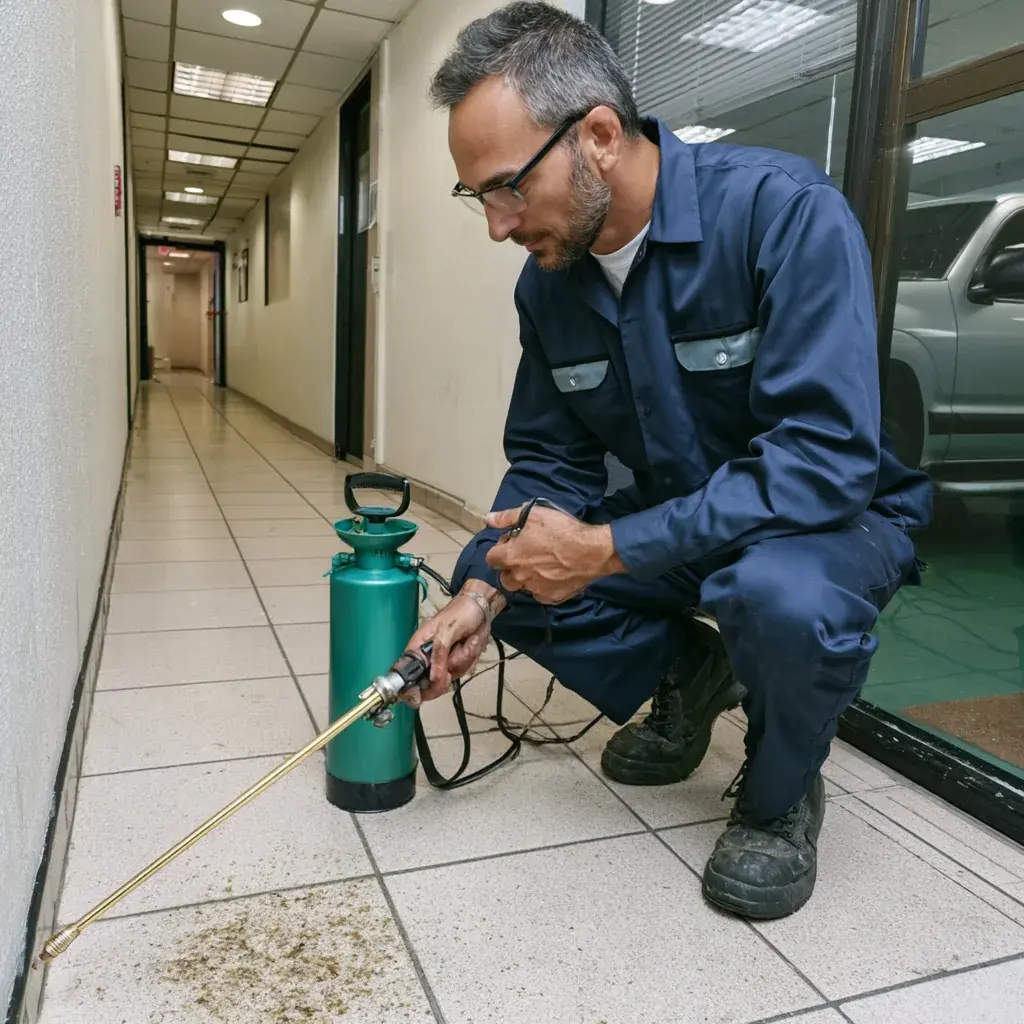
Treat one unit between two you skipped, and it's reinfested from both sides before the lease renews.
A Tallahassee apartment program has to be built around how fast this market turns over. Because leases here track the academic calendar rather than a normal twelve-month cycle, an entire building can turn in a couple of weeks instead of one unit at a time spread across the year, and bed bugs and German cockroaches ride in on the furniture and boxes that move during that window. That's why the sensible unit of work is the building, not the apartment: the stack of units around a complaint, the shared plumbing chase, and the corridor they open onto.
Standard multifamily advice assumes gradual turnover spread across the year. That's not how Tallahassee works. Between Florida State, Florida A&M and Tallahassee Community College, well over fifty thousand students are enrolled in a city of roughly two hundred thousand people, and student leases follow the school calendar rather than a rolling twelve months. The result is turnover that's faster, more concentrated, and clustered in windows no ordinary rental calendar predicts.
Two things follow for a pest program. Furniture and cartons are moving through the property nonstop, which is precisely how bed bugs and German cockroaches get in. And a unit often sits empty for only days, which is all the time there is to inspect and treat it properly before the next tenant's boxes arrive. A property with a standing turn protocol is set up to catch that window. A property that only calls once a resident complains has already missed it.
Multifamily turnover in Tallahassee moves on the university calendar more than the seasons, and large complexes near campus feel it hardest each August. That same crunch radiates outward toward Lake Jackson, where properties off Old Bainbridge Road and near Faulk Drive lease to the same student overflow, and even complexes off Woodville Highway toward Woodville see the pattern repeat as commuting students chase cheaper rent along the corridor.
German cockroaches and bed bugs pay no attention to lease lines. They move along plumbing chases, through the seam where a tub surround meets the wall, behind a shared kitchen wall, inside baseboard voids and under corridor doors. By the time one resident picks up the phone, the neighbors on either side and the units directly above and below are already part of the same population, whether or not anyone there has noticed yet.
So treat the stack, not the apartment. Inspect the unit that complained along with its immediate neighbors, treat whatever turns up, and place monitors in the units that look clean so you get warning before the next call comes in. Reacting one unit at a time is how a property ends up paying three separate times to solve the same infestation.
Multifamily stacks around Tallahassee sit on property portfolios that often stretch well beyond the city, and the licensed pros we connect you with track that wider footprint the same way. A complex near the US 19 corridor outside Perry gets logged against the same rules as one off Apalachee Parkway, and a manager running units toward Panacea or near the Econfina River State Park still needs the stack-not-unit approach applied consistently, because the pest doesn't care which portfolio spreadsheet the building sits on.
Bed bugs and German cockroaches travel as hitchhikers -- inside a secondhand couch, a mattress that spent a night at the curb, flattened cartons grabbed from behind a store, or a moving crate that sat next to an infested unit in storage. None of it traces back to the building, and none of it traces back to how clean the resident keeps their unit, which is worth saying to them directly.
The practical response is inspection timed to the moments things actually move: at turnover, at move-in wherever you can manage it, and any time maintenance is already inside a unit for an unrelated repair. A maintenance tech who can recognize a bed bug cast skin on a mattress seam is the cheapest early-warning system a property will ever have.
Florida keeps this obligation running for the whole tenancy, not just at move-in. Section 83.51, Florida Statutes requires a landlord to make repairs and take whatever steps are necessary to keep the premises fit and habitable, and that duty can't be waived by either party. The tenant's own obligations are covered separately, under section 83.52, Florida Statutes.
None of that settles who pays for a given treatment -- that comes down to the lease terms and the cause, and anyone claiming there's one flat rule for it is guessing. What actually holds up is a written record: what got reported and when, what the inspection found, what was done about it, and what the resident was asked to prepare. Have residents put reports in writing, and keep a copy of everything.
A vacant unit is the one moment you can see everything at once, so use it. Hand maintenance this list.
A building program is typically priced by the building: common areas, the exterior, trash rooms and a rotating share of units each visit, usually landing around an estimated $150 to $320 per building visit for a smaller property, with larger sites quoted on combined unit and building counts. A single unit's turn treatment runs closer to an estimated $110 to $240 on its own.
The reason per-unit math misleads is that the same dollar produces different results depending on where it's spent. Money put into the exterior, the trash rooms and a monitoring grid is what actually stops the calls coming in. Money spent reacting to individual complaints just buys the same treatment over and over. Ask any quote to show what it's doing for the units nobody has complained about yet.
Student turnover bed bug checks near FSU, FAMU and TCC housingCrawfordville, Lake Jackson and Woodville. Frenchtown to Southwood, licensed pros cover pest calls across Tallahassee
Homes near Lake Jackson and Killearn Estates sit on clay soil that eastern subterranean termites move through easily. Swarms tend to show up in spring. A slab or a crawl space both give them a way in, and neither is unusual to see here.There is no charge for the first walk round, and nothing is agreed until the scope is written. Every range is set out on the pricing guide, and the commercial overview covers how a scheduled account actually runs.
Docks, racking and inbound freight
Office suites and professional buildings
Storefronts, groceries and convenience stores
At minimum, inspect them and set out monitors. Bed bugs travel along baseboards, plumbing chases and shared walls, so the units on either side plus directly above and below are the usual route. Inspecting them now costs very little; finding out three months later that they'd been infested the whole time costs a great deal more.
Section 83.51, Florida Statutes puts the duty to keep the premises fit and habitable on the landlord for the entire tenancy, and that duty can't be waived -- so the obligation to act belongs to the owner. Who actually pays for a given treatment is a separate question that depends on the lease terms and the cause. Either way, get the reporting and inspection findings in writing.
Because the supply keeps arriving with belongings rather than breeding outdoors and wandering in on its own. This market's fast turnover means new arrivals keep coming. Buildings that stay ahead of it do two things consistently: inspect at every turnover, and treat the run of units around a find rather than just the one that called it in.
Yes -- that's the normal case here given how many residents work around a duty schedule. Notice goes out before the visit, access gets coordinated through the office, and any unit missed on the first pass gets picked up on a second sweep instead of skipped for a month. Exterior and common-area work doesn't need anyone home at all.
Less than most people expect for a routine visit -- just clear the space under the kitchen and bath sinks and behind the range. Bed bug work is the exception: it needs real preparation, a specific laundry routine and reduced clutter, so it's worth having that instruction sheet ready well ahead of time rather than written the day before.
The Greater Tallahassee Apartment Association is a real local network, and a number of the managers we place work with are members. It matters less as a credential and more as a signal -- those properties tend to already run standing protocols and keep good records, which is exactly the environment where a building-wide program earns its cost.
Call to schedule a walk of one property, and we'll connect you with licensed local pros who scope the whole stack instead of just the one unit -- and put every finding in writing.
Call (850) 388-6192