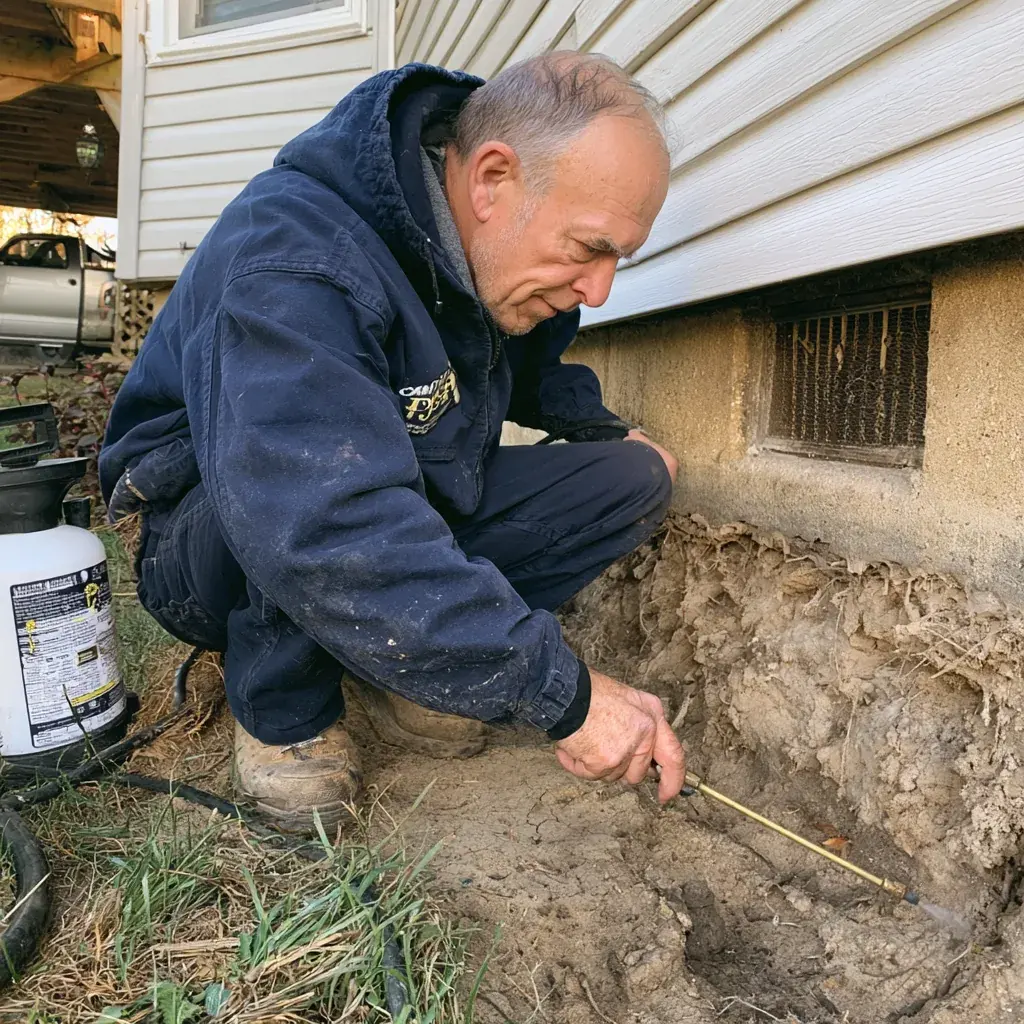
Identification
Slab or Crawl Space? Leon County Has No Shortage of Either
Two quotes on the same Tallahassee street can land hundreds of dollars apart with neither company in the wrong. Nine times out…
Read article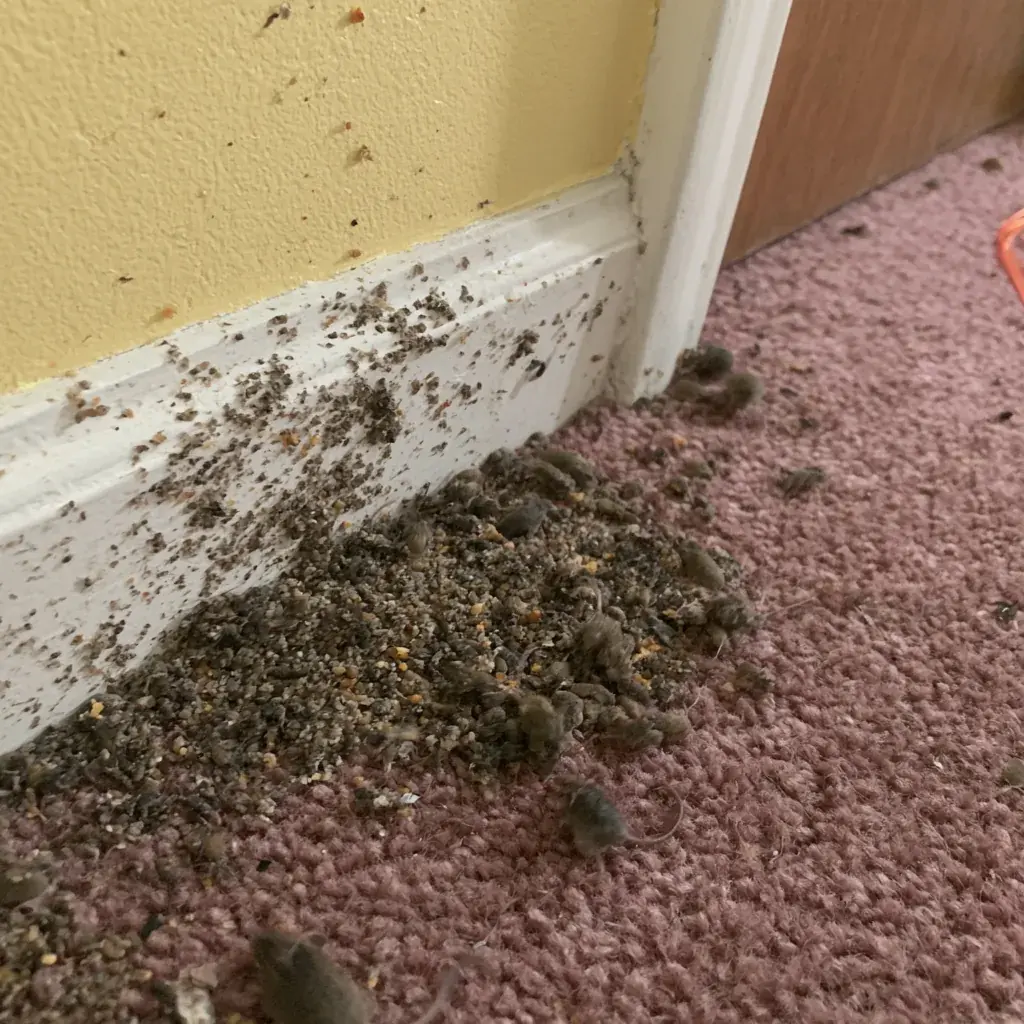
Under this canopy the traffic runs overhead. Traps clear out what is already there; sealing the roofline decides whether it comes back.
The sealing is the actual product here. The trapping is just the setup. A rodent job ending the week the traps stop catching is a job you will pay for all over again next fall, since every opening that let them in stays wide open. Most of that work happens down low around here: crawl space vents with torn screen, the gap where a foundation corner steps, dryer and hose bib penetrations, the rubber seals at the bottom corners of a garage door, the void where a porch slab meets the wall, and on slab houses the plumbing chase plus the space behind a bath tub.
Which rat is actually present decides where anybody sensible starts looking, and in this state the answer cuts against the national assumption. The roof rat dominates Florida's residential neighborhoods, a light climbing animal traveling branches, power lines and fence tops, and it comes in high. Under a canopy of live oak, with pecans and camellias pressed against the walls, that describes most of Leon County. So the search begins at roof height: the soffit return where a porch roof meets the wall, gable vents, the gap behind fascia, droppings in attic insulation rather than on a vapor barrier, rub marks along a rafter. Norway rats do show up here, mostly around commercial and older urban blocks, and they stay the ground animal: burrows against a foundation, runs under a deck, the base of a shed. Getting that backward costs a whole season, since traps set on a crawl space floor catch nothing at all when the traffic is running overhead.
Sealing has to happen before the traps go down, and that order matters more in Tallahassee once the ground is mapped out first. Around Killearn Estates, foundation gaps near Lake Killarney and Shannon Lakes give rats an easy path inside, while out toward Bradfordville, homes backing up to Lake Iamonia see the same pattern along the crawl space vents. The licensed pros we connect you with close those entry points before setting a single trap, so the work actually holds.
The pattern holds well outside city limits, too. Up in Havana, where the US 27 corridor runs past the old tobacco barns and Downtown Havana's older lots back up to farm ponds north of town, foundation gaps invite the same rodents that turn up in Tallahassee homes closer in. Near Quincy, places bordering Lake Talquin and Quincy Creek see damp crawl spaces year-round, which is exactly why the licensed pros we connect you with seal the structure before they ever set a trap.
We run rodent control and exclusion right across Leon County, whether you're in Killearn Lakes, Fort Braden, St. Marks, or elsewhere around Tallahassee. Sandy fill, wood sitting close to grade and water standing in a low corner after a thunderstorm are what keep norway rats going in this part of Florida, so those are what the work is aimed at.
The bulk of this is private houses, and residential pest control sets out what a visit involves. Tenanted stock, shops and anything trading sits on commercial pest control.
They travel with a shoulder brushing something solid and almost never cross open floor, so the evidence lays itself out along a wall base, a joist, or the lip of a shelf. That line is the route, and the route is exactly where traps belong. Traps set in the middle of a room are decoration, nothing more.
Fresh gnawing comes out pale and splintered against weathered wood, so it dates itself on sight. On a vent screen, a garage door corner or a soffit edge, it answers directly how they are getting in. It is also the exact spot that has to come back in metal, because whatever they chewed through once they will chew through again, and expanding foam is a delay rather than a repair.
A smooth hole about the width of a golf ball, tight against the block or under a step with soil fanned below it, means a Norway rat, and they do turn up here, mostly around older urban and commercial blocks. Under this canopy the more frequent find sits overhead: greasy rub marks along a rafter, droppings in attic insulation, a gap behind fascia where a porch roof meets the wall. Roof rats dominate Florida neighborhoods and they come in high, so any search confined to ground level finds nothing and draws the wrong conclusion.
Where the sound sits is the whole diagnosis. Low in a wall or under the floor means rodents. Rolling and scratching overhead at first light means squirrels moving acorns. Chittering in the small hours means bats, which brings an entire calendar along with it. Whichever it is, it starts within an hour of the house going quiet and follows the same path night after night, so listening across two consecutive evenings tells you more than any flashlight will.
Dogs work this out weeks before anybody in the house does, so a dog fixated on the same cupboard, the base of the fridge or one corner of the garage counts as evidence rather than a quirk. Mention it on the phone, because it reshapes the plan as much as it confirms one: a household with dogs changes where bait can go, and often means it does not go down at all, in favor of trapping and sealing instead.
The inspection produces a list of openings with exact locations rather than a general impression. Vents, penetrations, the slab edge, the garage corners, the roof line wherever a lower roof ties in. That list is the quote.
Galvanized mesh, hardware cloth, sheet metal, mortar, new lumber wherever wood has rotted away. Expanding foam on its own is a stopgap that gets reopened soon enough, so it goes in behind a hard barrier rather than standing in as the barrier itself.
Snap traps go onto the runs indoors and inside the crawl space. Anything placed outside belongs in a tamper-resistant station, anchored and keyed shut, which matters a great deal on any property with dogs, cats or children using the yard.
Droppings and nesting material come out, the area gets cleaned, and every opening gets checked again at a follow-up visit. A sealed house showing no new sign after two weeks counts as a finished job.
Rodents chew wiring, contaminate stored food and tear insulation apart, and a population living under a floor rarely stays confined there once nights turn cold. The part actually worth attention is which half of the work lasts. Trapping deals with the animals in the building this month. Sealing is what stops the next wave, and it is the only part of a rodent job still doing anything two years down the line.
The Florida wood-destroying organism report is not a structural damage report and reveals nothing about wildlife, so a clean report says nothing whatever about whether something is living under the floor. Damage itself carries no requirement to appear on that form either. Read it for exactly what it covers, and arrange a separate look at the substructure for rodents.
Conditions conducive to subterranean termites have to be reported, and the list reads like a description of good rodent habitat: wood in direct soil contact, cellulose debris under the structure, excessively wet wood at 20 percent moisture or above, insufficient clearance between wood and soil, and excessive crawl space moisture. Clearing every one of those solves two problems for the price of one.
Ask what the price covers before you agree to it. A one-time treatment near Cascades Park and a year-round plan near Killearn Estates are not the same cost or the same coverage.
| One-time fix | Short-term relief | Full elimination |
|---|---|---|
| Typical Use | Pest Control Near Betton Hills, Midtown and Killearn Estates | an estimated $115–$490 |
| Ants, roaches, wasps | why humid clay soil around Betton Hills keeps pest calls steady | an estimated $135–$700 |
| Ongoing prevention | Pest Control Serving Betton Hills, Killearn Estates and Midtown Tallahassee | an estimated $205–$1115 |
| Subterranean termites | Termite and ant pressure near Bradfordville, Southwood, and Frenchtown homes | an estimated $325–$1860 |
Ask the licensed pros we connect you with for a firm number before agreeing to anything. A phone estimate without seeing the property, from Midtown to Bradfordville, is only a guess.
Bait has its place outdoors in locked, anchored stations, and it is the wrong first move in a home with dogs. Rodents taking bait die wherever they happen to choose, which can be inside a wall, and a poisoned rodent risks being eaten by a pet or a hawk. Indoors, trapping recovers the animal and confirms the count, something bait can never do.
Reckon on two to three weeks with a couple of follow-up visits worked in. The trapping curve drops off fast once traps sit on the right runs. Sealing gets scheduled separately since it is genuine carpentry, and on a larger crawl space perimeter it can eat a full day on its own.
A trapping program with follow-up visits included runs an estimated $125 to $195. Exclusion gets quoted separately after the inspection, since it is labor and materials: a handful of openings is a small job, while rescreening every vent around a crawl space is not. Guide figures, never a quote.
Not the whole thing, but every opening a mouse can use does, and that gap is smaller than most people expect. The order runs vents first, then penetrations, then doors and the slab edge. Whatever gets left open is the one they will find, so the inspection's list is worth completing in full rather than sampling from.
It fades across a week or two, and finding and removing the carcass shortens that, which sometimes means opening a small section of drywall or soffit. Odor treatments mask the smell rather than remove it. That is one more argument for trapping indoors rather than baiting, since a trap is exactly where it was left.
Only if the building reopens itself. Seals fail where wood rots, a vent screen tears, or a garage door seal hardens and lifts, so checking the same list once a year is worth more than another round of traps ever will be. Keeping firewood off the ground and away from the wall removes the staging ground they use to try again.
Licensing matters more than a company's size. Florida separates general household pest control from termite work under Chapter 482, so a Monroe Street office handling roundup general pests may not carry the termite endorsement. Ask which category applies before assuming one visit covers everything a Tallahassee home might need.
Slab foundations near Lake Jackson mean subterranean termite access from the ground up
Two quotes on the same Tallahassee street can land hundreds of dollars apart with neither company in the wrong. Nine times out…
Read article
Twenty percent is a scoreboard, not a verdict. Here is the order to work through, and what each step actually costs toward…
Read article
Traps thin out whatever is already indoors. Sealing is the half that stops you running the whole exercise again next October.
Read articleCall and describe what you are looking at. Whoever comes out covers Tallahassee and the towns on either side, and they look at the house before putting a number on anything.
Call (850) 388-6192