What Is Wrong With My Tallahassee Home?
Most calls start with something seen, not a confirmed pest. A trail of pepper-like droppings along a Betton Hills baseboard, a papery wing shed near a Killearn Estates window, a smell from a Frenchtown crawl space. This page sorts what you noticed into what it usually means before you decide what to do next.
Almost nobody calls knowing the species. They call knowing what was on the windowsill, what they heard through the ceiling at two in the morning, or where the bite came from when there was no insect to be found. This page is built in that direction, from the thing in front of you to the likely cause, so you can go straight to one page instead of reading twenty. Landing on two possibilities is a perfectly normal result, and settling between them is what the free inspection is for.
Some signs are loud, like a mud tube climbing a slab near Lake Ella, others are quiet, like a faint scratching at night in a Midtown attic. Match what you have seen below, then follow it to the page written for that exact sign, not a general guess.
The one that matters most here is a swarm indoors. Winged ants and termite swarmers look similar to anyone who has not put them side by side, and they start entirely different conversations, only one of which involves the substructure. Given that swarming in this state runs from late winter into September or October, that call gets made most of the year. Where a row below names a look-alike, read the look-alike page first.
Do not sit on these ones
Each of these either spreads while you think about it, involves a sting or a bite, or costs materially more the longer it sits.
| What you noticed | Usually means | Read up |
|---|---|---|
| A little heap of clear wings collecting on a windowsill in August | Termite swarmers drop their wings the moment they land, and a sill catches them on the way toward the light. Local swarms run from late winter into September or October on warm days after rain, so wings turning up in August is normal for this market and still points to a nearby colony. | Eastern Subterranean Termite |
| A tube of packed soil climbing the outside of my foundation wall | Subterranean termites build these tubes from soil and saliva to hold moisture around them as they cross concrete, block or brick. Break out a short piece and check back in a few days -- if it's been rebuilt, the route is actively in use. | Eastern Subterranean Termite |
| A row of small red bites across my arm after a night's sleep | Bites clustered in a short line usually follow wherever skin pressed against bedding. Check the mattress piping and headboard joints with a flashlight before treating anything -- bites alone aren't proof, since several other insects leave a similar mark. | Bed Bug |
| Loose dirt mounds in the lawn that reappear a few days after mowing | Mowing only scatters the top of a mound and leaves the colony below untouched, so it rebuilds within days. Treating just the visible mounds leaves the rest of the colony alone, which is why the mounds seem to shift a few feet each time and the sting risk to kids and pets keeps coming back. | Fire Ant |
| A patch of floor that feels soft and gives slightly in front of the tub | On a slab home this usually traces to the bath trap, the open framed pocket of bare soil under the tub drain that stays damp and can feed a colony straight into the subfloor. That spot and the other plumbing penetrations are the most common slab entry point, and a gap of roughly 1/32 inch is all a termite actually needs. | Eastern Subterranean Termite |
| Small tan roaches darting out from the dishwasher gasket when the kitchen light flips on | This species lives entirely indoors, breeds nonstop and favors the warm, damp edges of a dishwasher, kettle base or coffee maker. They carry bacteria and asthma triggers across food surfaces, and because they reproduce so quickly, a few spotted in the open usually means a much larger group hiding in the voids. | German Cockroach |
| A dense, irregular web low in a crawl space corner with a papery tan sac inside | Black widows favor undisturbed low corners, and their web is a tangled, irregular mess rather than a flat sheet. The bite requires medical attention, so treat that corner as occupied and use a light and gloves until someone has cleared it out properly. | Black Widow Spider |
| A tick attached behind my knee with one white spot on its back | That marking identifies an adult female of the tick most commonly encountered around yard edges and tree lines here. Pull it straight out with fine tweezers close to the skin, seal it in a bag and note the date -- that record matters if a rash or fever shows up later. | Lone Star Tick |
| A gray papery nest at ground level beside the shed, insects streaming in and out | Heavy traffic through one opening means a colony big enough to actively defend it, and these will sting repeatedly rather than once. A mower or string trimmer passing close is the usual trigger, so the nest gets handled after dark by someone with the right gear -- never flooded or burned out. | Yellow Jacket |
| A ceiling panel sagging, with a damp brown ring spreading around it | Weight plus moisture is sitting on it, and in a roof space that means either a soaked nest and latrine or an active plumbing or roof leak. Don't push up on it and don't send anyone into the space until you know which -- a raccoon will defend a nest, and the waste itself carries a genuine health risk. | Raccoon |
On the list for this month
Nothing here needs your afternoon. None of it should still be here next season either.
| What you noticed | Usually means | Read up |
|---|---|---|
| A dusting like flour beneath pinhole-sized round holes in the floor trim | Powderpost beetles leave a fine flour-like dust at their exit holes as adults emerge. Brush the pile away and note the date on the wall behind the trim -- if fresh powder shows back up within a week or two, that separates an active infestation from holes left over from years ago. | Powderpost Beetle |
| Tiny dark droppings, about the size of a grain of rice, along the kitchen baseboard | Mouse droppings are dark and pointed at the ends, dropped repeatedly along the same nightly route. That route generally traces back to the gap they're entering through, which is where the actual fix belongs rather than the middle of the room. | House Mouse |
| Dark, greasy smear marks along the wall behind the refrigerator | Rats deposit grease and grime from their fur onto anything they brush against repeatedly, and appliance voids are a favorite run since they're warm and out of sight. A smear that's dark and slightly shiny is still in active use, so the entry point behind it needs sealing along with trapping. | Norway Rat |
| Large roaches showing up in the bathroom a couple of days after a thunderstorm | Storm runoff pushes these roaches up out of sewers, drains and mulch beds and into the nearest dry room, usually a bathroom or laundry. They're outdoor insects using the plumbing as a highway, so drain screens, sealed pipe gaps and a treated perimeter accomplish more than spraying the room itself. | American Cockroach |
| A band of welts at my sock line and waistband after working in the yard | Chigger larvae climb until clothing presses tight against skin and feed there, which is why the welts line up at the ankles and waist. The itching starts hours later, so the actual exposure was often the day before, and a hot soapy shower right after yard work heads most of it off. | Chigger |
| A pile of coarse wood shavings mixed with insect fragments under a window frame | Carpenter ants don't eat wood -- they excavate it and push the debris out, which is why the pile contains leg and wing fragments mixed in with the shavings. That mix is what distinguishes it from ordinary sawdust, and they almost always target wood that's been wet at some point, so the moisture source matters as much as the ants do. | Carpenter Ant |
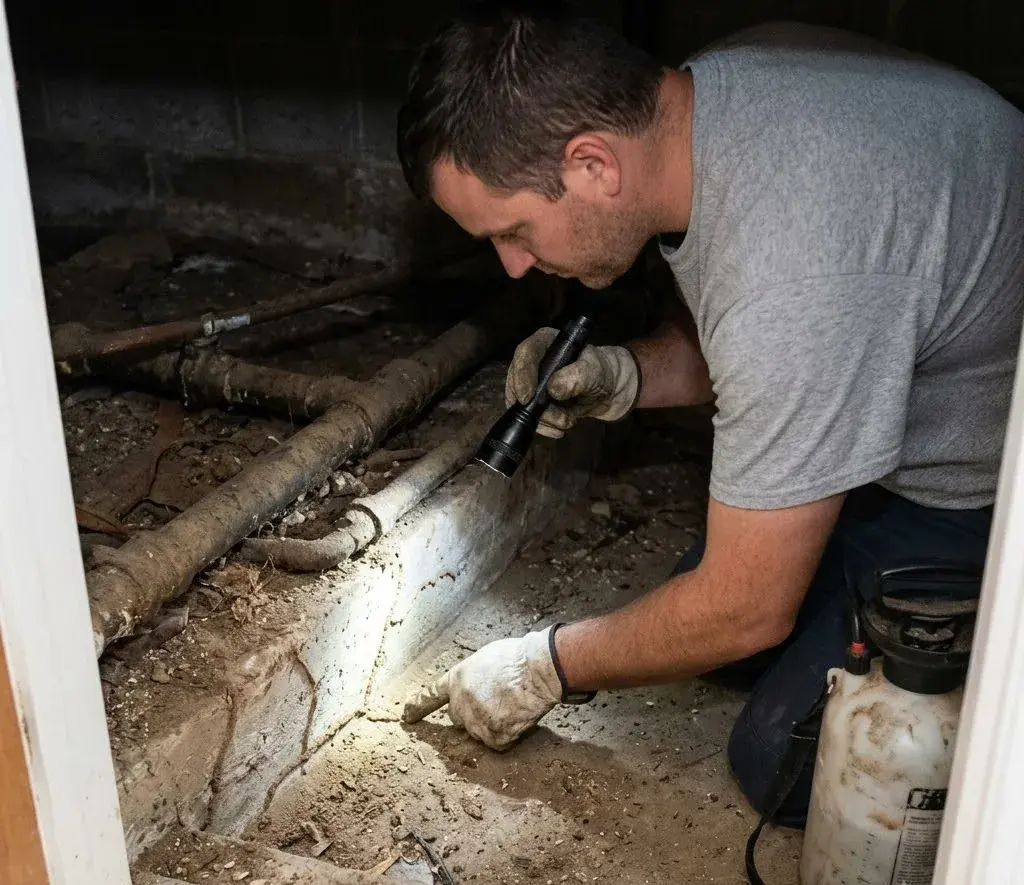
| The crawl space liner pulled back with beads of water forming on the ducts above | Exposed soil under the floor sends moisture directly up into the framing, and the sandy ground here drains fast on the surface while staying damp just beneath it. Wood holding 20 percent moisture or more counts as a reportable condition conducive to termites, so this is exactly what tends to turn up on a WDO report at sale time. | Eastern Subterranean Termite |
| Tiny dark insects jumping off the dog and biting around my ankles | The bulk of the population is eggs and larvae hiding in carpet, bedding and wherever the pet sleeps, so what you see on the animal is a small fraction of the total. Treating the pet without treating the house leaves the next generation to hatch out, which is why the biting seems to stop and then start right back up. | Flea |
| A crawl space vent screen ripped open at one corner | Rats chew through screen and thin wood to reopen a route, and a vent is the easiest target on most local houses. Patch it with heavy-gauge hardware cloth rather than standard insect screen, since anything they've bitten through once, they'll bite through again. | Norway Rat |
| Scratching and rolling noises overhead just after sunrise | Gray squirrels are most active at first light, and the rolling sound is an acorn being pushed across the boards above the ceiling. They gnaw to keep an opening usable, so a small gap at a soffit or gable end turns into a permanent doorway that later lets in more than just squirrels. | Gray Squirrel |
| An ammonia odor in the attic with small pellets below the gable end that crumble to dust | Droppings that pile in one spot and crumble into insect fragments came down from a roost overhead, which is what distinguishes them from rodent droppings. Sealing a bat colony out is prohibited statewide from 16 April through 14 August because the young can't fly yet, so during that window the work is limited to inspection, planning and protecting the living space, with exclusion carried out starting 15 August. | Bats |
Understand it before you spend on it
Annoying rather than a threat to the building. Worth knowing what it is; rarely worth paying to remove.
| What you noticed | Usually means | Read up |
|---|---|---|
| A round hole about pencil-width in the fascia board, coarse sawdust piled below | Carpenter bees bore straight in across the grain, then turn and tunnel along it, reusing and extending the same gallery year after year. The bees themselves rarely destroy a board fast, but woodpeckers tear the galleries wide open chasing the larvae, and that's usually where the real damage to fascia and trim comes from. | Carpenter Bee |
| A steady trail of small ants along the window frame that comes back a day after spraying | A trail that reforms right after a contact spray points to a colony with many queens living outdoors and feeding on honeydew in nearby shrubs. Repellent sprays just scatter the workers and can split one colony into several new trails, so baiting plus addressing the outdoor source is what actually stops it. | Argentine Ant |
| Long-legged bugs that leap toward me the moment I open the crawl space hatch | Camel crickets breed in damp conditions and jump toward movement rather than away from it, which is startling but harmless. They're essentially a moisture reading with legs, so sealing the ground cover and redirecting water away from the foundation does more than repeated spraying ever will. | Camel Cricket |
| A gutter clogged solid with pine straw, water overflowing onto the siding | That blockage keeps the fascia, siding and soil below it constantly wet, and the standing water in the trough is enough to breed mosquitoes within about a week. Clearing it out solves a breeding site and a wood-moisture problem in the same afternoon -- the cheapest pest fix in this whole business. | Mosquito |
| Raised ridges of soil winding across the lawn, with small dirt piles along them | The ridges are shallow feeding tunnels and the piles are spoil pushed up from deeper digging, so both belong to the same tunnel system. Moles are hunting grubs and worms rather than roots, which is why grub killers and scent repellents rarely move them along, while trapping the active runs actually does. | Mole |
| Chewed corners on cardboard boxes in the garage, with shavings scattered on the shelf | Mice gnaw cardboard and soft plastic to gather nesting material and keep their teeth worn down, so the shavings mark where they've been working rather than where they got in. Move food and paper into hard containers, then trace the sign back along the wall to find the actual entry gap. | House Mouse |
| A sharp, lingering odor near the crawl space vent after dark | Skunks den under crawl spaces, decks and sheds, and the smell typically arrives well before anyone spots the animal itself. Wait until the young have moved out on their own before sealing the opening, then screen it properly so nothing ends up trapped underneath. | Skunk |
| A shed skin, snake-shaped, left on a crawl space wall | Snakes shed in one complete piece against something solid, and finding one under the house almost always means it followed rodents in there. Deal with the rodent problem and the food source leaves with it, which does more good than trying to catch one snake. | Snakes |
| Insects swarming the porch light with one or two showing up indoors by morning | This roach is drawn to light and lives outdoors in leaf litter, mulch and clogged gutters, so one or two indoors is just traffic passing through, not a resident population. A cooler bulb, mulch pulled back from the wall and clean gutters cut the pressure at its source before anyone reaches for a can of spray. | Smokybrown Cockroach |
Frequently Asked Questions
What does it mean if I see a little heap of clear wings collecting on a windowsill in August?
Termite swarmers drop their wings the moment they land, and a sill catches them on the way toward the light. Local swarms run from late winter into September or October on warm days after rain, so wings turning up in August is normal for this market and still points to a nearby colony.
What does it mean if I see a tube of packed soil climbing the outside of my foundation wall?
Subterranean termites build these tubes from soil and saliva to hold moisture around them as they cross concrete, block or brick. Break out a short piece and check back in a few days -- if it's been rebuilt, the route is actively in use.
What does it mean if I see a dusting like flour beneath pinhole-sized round holes in the floor trim?
Powderpost beetles leave a fine flour-like dust at their exit holes as adults emerge. Brush the pile away and note the date on the wall behind the trim -- if fresh powder shows back up within a week or two, that separates an active infestation from holes left over from years ago.
What does it mean if I see tiny dark droppings, about the size of a grain of rice, along the kitchen baseboard?
Mouse droppings are dark and pointed at the ends, dropped repeatedly along the same nightly route. That route generally traces back to the gap they're entering through, which is where the actual fix belongs rather than the middle of the room.
What does it mean if I see dark, greasy smear marks along the wall behind the refrigerator?
Rats deposit grease and grime from their fur onto anything they brush against repeatedly, and appliance voids are a favorite run since they're warm and out of sight. A smear that's dark and slightly shiny is still in active use, so the entry point behind it needs sealing along with trapping.
What does it mean if I see a row of small red bites across my arm after a night's sleep?
Bites clustered in a short line usually follow wherever skin pressed against bedding. Check the mattress piping and headboard joints with a flashlight before treating anything -- bites alone aren't proof, since several other insects leave a similar mark.
What does it mean if I see large roaches showing up in the bathroom a couple of days after a thunderstorm?
Storm runoff pushes these roaches up out of sewers, drains and mulch beds and into the nearest dry room, usually a bathroom or laundry. They're outdoor insects using the plumbing as a highway, so drain screens, sealed pipe gaps and a treated perimeter accomplish more than spraying the room itself.
What does it mean if I see loose dirt mounds in the lawn that reappear a few days after mowing?
Mowing only scatters the top of a mound and leaves the colony below untouched, so it rebuilds within days. Treating just the visible mounds leaves the rest of the colony alone, which is why the mounds seem to shift a few feet each time and the sting risk to kids and pets keeps coming back.
What does it mean if I see a band of welts at my sock line and waistband after working in the yard?
Chigger larvae climb until clothing presses tight against skin and feed there, which is why the welts line up at the ankles and waist. The itching starts hours later, so the actual exposure was often the day before, and a hot soapy shower right after yard work heads most of it off.
What does it mean if I see a round hole about pencil-width in the fascia board, coarse sawdust piled below?
Carpenter bees bore straight in across the grain, then turn and tunnel along it, reusing and extending the same gallery year after year. The bees themselves rarely destroy a board fast, but woodpeckers tear the galleries wide open chasing the larvae, and that's usually where the real damage to fascia and trim comes from.
Not Sure What You Have
Not sure what is actually causing the problem is the most common starting point, and it is a fair one. Describe what you are seeing, whether it is damage, droppings, noise, or something moving, and get pointed toward the pest that matches. The licensed pros we connect you with can then take it from there with an actual look at your Tallahassee home, rather than a guess based on a description alone.
Call (850) 388-6192