This stretch of the Panhandle runs its own way
It comes down to the ground itself. Red Hills soil drains fast and warms up early in the year, which is more or less the specification a fire ant colony would write for itself given the chance: dry, bright, easy to tunnel, warm enough to keep brood moving. An open lawn, the strip of grass along a fence line, the outfield at a ball park and the grass shoulder of a county road all read as prime real estate. A shaded lot on heavy wet clay would give them a much harder time, and there is not a great deal of that around here.
Rain relocates them rather than drowning them, which is the part that catches people out. A hard summer storm saturates the top few inches, the colony shifts up and sideways to stay above the water, and four days later the yard has mounds in places it did not have them before. Anyone who mows in Leon County in July has flattened a mound and watched it reappear a yard away inside the week. Nothing was killed. It moved house.
Sandy lots near Midtown show the same shifting mounds, especially where Thomasville Road runs close to drainage near the Franklin Boulevard stormwater ditch — the grade drains slow, so colonies resettle uphill after every hard rain. Tallahassee's clay-sand mix holds moisture just long enough to push ants toward higher lawn edges, driveways, and foundations. Out past Lake Jackson, the same pattern shows up wherever runoff collects and sits before soaking in.
Southwood and Buck Lake sit closer to standing water than Downtown Tallahassee does, and that changes what shows up around a house through a Tallahassee summer. A pro working Waverly Hills one week and Southwood the next adjusts for the water table, not just the address.
What Changes West of Town
- Size
- Mixed sizes inside a single nest, from about 1/8 up to 1/4 inch
- Color
- Reddish brown head and thorax, noticeably darker toward the rear
- Mound
- A dome of loose soil with no hole in the top, tunnels running out below ground
- Preferred ground
- Sunny, sandy and well drained: lawns, pasture edges, ball fields, road shoulders
- Licensing
- Around all year, most obvious spring through fall, with a burst of new mound building in the days after heavy rain.
- Follow-ups
- an estimated $89–$229
The Look-Alike Worth Ruling Out
Ordinary lawn ant hills. An ordinary lawn ant builds a small crater with a clear hole in the middle, and the workers run in all directions the moment something disturbs them. A fire ant mound has no opening on top at all, and the colony boils up and outward instantly. Test it from a step back with a long stick and never with a bare hand. The answer decides whether the yard needs a baiting program or nothing more than a mower.
Mild Winters Slow Pests, Never Stop Them
Broadcast bait over the entire yard is the foundation of the job, and the reason is plain arithmetic. Treating mounds one by one deals only with the colonies you happened to spot, and the ones you walked past carry on untouched. Bait works the other way around. Foragers find it, take it underground and pass it through the colony until it reaches the queen, which is the only part of the nest that decides anything. It is deliberately slow. Judging it after three days and concluding it failed is the most common mistake made with it.
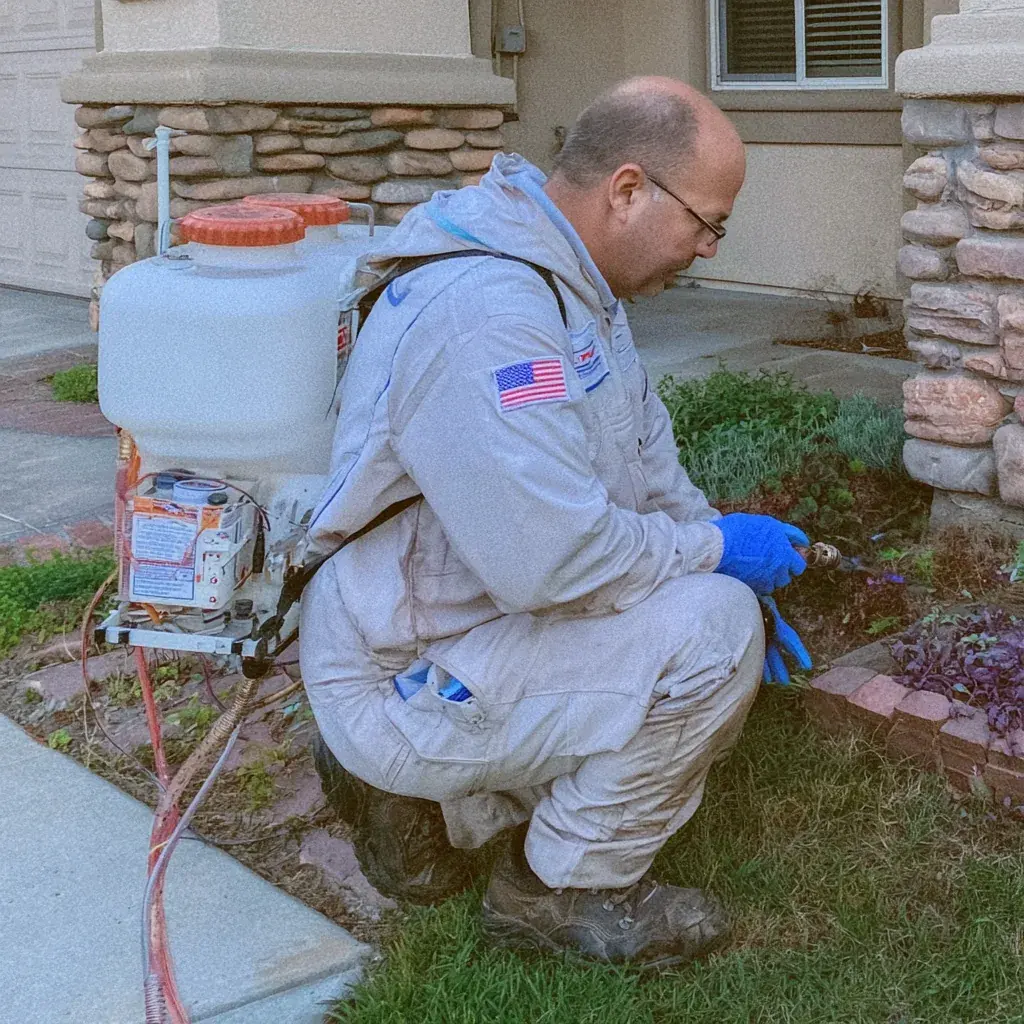
Direct mound treatment sits on top of that, for the ones beside a patio, under a swing set or next to a back door, where waiting several weeks is not an acceptable answer. Done right it means enough liquid volume to reach the bottom of the nest in one go, applied without poking at the mound first. Disturb a colony before you treat it and it relocates overnight, which is how a mound ends up a few feet away looking as though the treatment did nothing at all.
After that it turns into a rhythm rather than an event. Mated queens fly in off the surrounding land every year, so a spring application and a late summer one keep a yard genuinely clear, and the licensed pros we connect you with will usually set that up as a scheduled yard service instead of billing a visit every time somebody spots a mound.
Betton Hills sits on the same clay soil as most of Tallahassee, and that soil holds moisture long after a storm passes. Eastern subterranean termites work through that dampness quietly, often for years, before anyone in Midtown or Levy Park notices a mud tube along a slab edge or a porch post.
SUBTERRANEAN VS. DRYWOOD TERMITES IN LEON COUNTY HOMES
| Full Protection |
What's Covered |
|---|
| Slab and Crawl Space Homes Only | Licensed Local Pros |
| Termite and roach service near Lake Ella | Slab vs. Crawl Space |
| Copperhead Country West of Tallahassee Calls for Care | Bed Bug Help Near FSU Housing |
Why DIY Fixes Rarely Hold in Tallahassee
Bait off the shelf works, so long as you follow the label rather than your instincts. Dry granules on dry grass, on a day with no rain forecast, spread over the whole lawn instead of tipped onto the mounds, then left completely alone for two weeks. Where it falls apart is the impatient middle stretch, when nothing appears to be happening. Boiling water, gasoline and a shovel are all popular around here, all range from dangerous to illegal, and the reliable result of every one of them is a split colony living in two new places. Grits do nothing whatsoever, and never have.
What Is Worth Worrying About Here
The sting injects venom rather than formic acid, which is why it burns and why it leaves a pustule instead of a simple welt. For most people the treatment is cold water, soap, a cold pack, an antihistamine for the itch, and leaving the pustules alone, since scratching them open is the usual route to a secondary infection. Multiple stings on a small child, a pet, or anybody who has reacted badly to insect venom before deserve a call to a doctor, and any sign of a whole-body reaction such as swelling away from the sting site, trouble breathing or dizziness is an emergency. Pets get stung on the muzzle and paws, so the fenced area a dog uses is worth treating first.
Got Pests Near Lake Ella?
Termite swarm on Thomasville Road or roaches near Lake Ella, the same call works. Reach the licensed pros we connect you with at (850) 388-6192.No fee for the inspection, and nothing begins until the scope is written down. Ranges for the whole list live on the pricing guide, and this one sits under Fire Ant Treatment.