Buying & Selling
New Build Pretreatment: What Florida Code Requires
Every new home in Florida receives termite protection before a single person moves in, and the paperwork proving it is fastened to…
Read article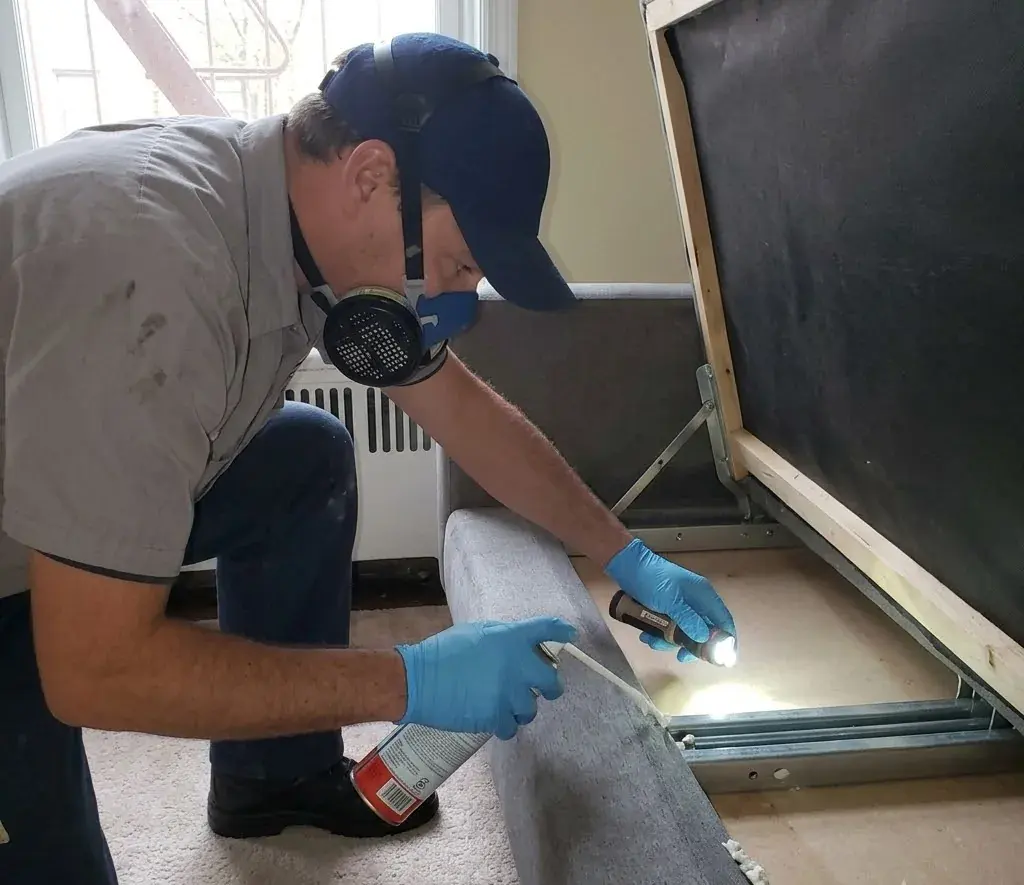
Do not strip the beds. The evidence is the map, and in a shared building one unit is never the job.
Before an inspection, there is one thing not to do: strip every bed and run the whole house through a hot wash. It feels like taking charge and it destroys the only map anybody had. The dark specks along a mattress seam, the shed skins wedged in a headboard joint, the stained line where the fitted sheet tucks under the corner: that is the evidence telling an inspector which rooms are involved, roughly how long it has been going on, and where the harborage sits. Launder it all first and the treatment gets planned on guesswork instead.
The second thing worth knowing early is that these insects travel with people and along shared structure. Rental turnover here is concentrated rather than steady, and in a duplex or an apartment block, treating one unit while the neighbors either side and the one above go untouched pays for a wall the bugs simply walk around. If you are in a multi-unit building, the first call is to the property manager, in writing, so the adjoining units can be inspected in the same week rather than three months later.
Bed bugs do not respect city limits either, and the licensed pros we connect you with cover the same radius the bugs travel by way of moving boxes and guest bags — from Tallahassee out to weekend rentals near Panacea and Ochlockonee Bay, down toward the salt marsh outside St. Marks, and out along the US 19 corridor near Perry. Wherever the mattress came from, the first inspection has to map every room a piece of furniture passed through, not just the one with the bites.
Up north, Ox Bottom sits about nine miles from downtown Tallahassee off Ox Bottom Road, where lots backing onto Lake Overstreet and the branch creeks near Maclay Gardens State Park stay damp enough to keep secondhand furniture suspect long after a move-in. The same caution applies near Betton Hills, where older homes around McCord Park and the Betton branch creeks often hide a hitchhiker in a headboard nobody thought to check. The licensed pros we connect you with treat every used piece as a lead worth tracing before it reaches a bedroom.
We run bed bug treatment right across Leon County, whether you're in Lake Jackson, Woodville, Southwood, or elsewhere around Tallahassee. Sandy fill, wood sitting close to grade and water standing in a low corner after a thunderstorm are what keep bed bugs going in this part of Florida, so those are what the work is aimed at.
The bulk of this is private houses, and residential pest control sets out what a visit involves. Tenanted stock, shops and anything trading sits on commercial pest control.
This is the least reliable sign there is, which surprises people. Reactions vary enormously and plenty of households never react at all, so one partner can be covered in welts while the other sleeps through it untouched. Bites are a reason to take a flashlight to the mattress seams and the bolt holes in the frame, not a diagnosis. If a bite becomes infected, that is a doctor rather than a pest company.
This is the sign worth trusting. Small dark dots that smear when you wipe them with a damp cloth are digested blood, and they build up wherever the insects sit still: the piping round a mattress edge, the underside of a slat, the screw holes in a bolt-together frame. Dots that do not smear are usually something else entirely.
Nobody identifies this smell on their own; they recognize it the moment somebody names it. Sweet and musty, noticeable on walking into one bedroom and not the rest of the house. By itself it proves nothing. In a room that already has smearing dots along the mattress seam it tells you this has been running for months rather than weeks.
Shed skins keep their shape and sit there long after the insect that left them has gone, so they are a record rather than a sighting. What matters is the range of sizes. Several sizes together in one joint means something has been breeding there through more than one generation, which is a different job and a different price from a single hitchhiker that arrived on Friday.
In this town the usual routes are a sublet handover, a dorm move-out, a bed frame bought secondhand, a couch collected off a curb in August, or a hotel stay on the way back from somewhere. Pinning down roughly when it started matters more than it sounds, because it decides whether anybody needs to look at one room or at everything down the hallway.
Beds, frames, headboards, seating, nightstands and the carpet edge get checked with the evidence still in place. Photographs and a written list of affected rooms come out of that, which is what the treatment plan is built from.
You get a short, specific list: what to bag, what to launder and dry hot, what to leave completely alone. Doing more than the list, or shifting belongings into an untouched room, is the most common way a job gets harder.
Seams, voids, frame joints and furniture get worked directly, and a second visit follows a couple of weeks later. That second pass exists because eggs laid before the first treatment hatch after it.
Encasements go on, interceptors go under the bed legs, and the room gets rechecked. A job ends on evidence that catches have stopped, not on the calendar running out.
A half-finished bed bug job is worse than no job, because survivors scatter into rooms that were clean and the household starts sleeping elsewhere, which spreads it further. The two things that decide the outcome are both unglamorous: an inspection with the evidence intact, and follow-up visits timed to the hatch. Skip either and you pay twice for the same bedroom.
The Florida Residential Landlord and Tenant Act sits in Part II of Chapter 83, Florida Statutes. Under section 83.51, Florida Statutes a landlord has to make all repairs and do whatever is necessary to put and keep the premises fit and habitable, and that obligation covers the entire tenancy rather than the move-in date. Those duties cannot be waived by agreement. What that does not settle is who pays for a given pest problem, which depends on the lease and on the cause.
Tenant obligations are set out separately at section 83.52, Florida Statutes. The practical advice published in Florida consumer material is to report needed repairs in writing and keep a copy, avoid damaging the premises, and keep paying rent while the issue is dealt with. Short-term and vacation lets are a different arrangement, so do not assume Article 5 applies to one without checking.
Ask what the price covers before you agree to it. A one-time treatment near Cascades Park and a year-round plan near Killearn Estates are not the same cost or the same coverage.
| One-time fix | Short-term relief | Full elimination |
|---|---|---|
| Typical Use | Pest Control Near Betton Hills, Midtown and Killearn Estates | an estimated $235–$1105 |
| Ants, roaches, wasps | why humid clay soil around Betton Hills keeps pest calls steady | an estimated $280–$1575 |
| Ongoing prevention | Pest Control Serving Betton Hills, Killearn Estates and Midtown Tallahassee | an estimated $420–$2520 |
| Subterranean termites | Termite and ant pressure near Bradfordville, Southwood, and Frenchtown homes | an estimated $670–$4200 |
Recurring lawn and ornamental coverage tends to cost less per visit than a one-time call. Ask what a property near Lake Ella or Buck Lake would run before deciding which to book.
Almost never, and throwing it out early is one of the two expensive mistakes people make. A mattress gets treated and then sealed in a zippered encasement, which shuts in anything left inside and turns future checks into a two-minute job. Putting it on the curb hands the problem to whoever loads it into a truck, and buying a replacement before the room has been treated is the reliable way to lose the replacement as well.
Do: pick the clutter up off the floor and clear a walking path round each bed. Do not: launder anything, strip anything, or carry a single bag, mattress or armful of clothes into another room. The evidence on those surfaces is the only map anyone has, and moving belongings between rooms is precisely how one bedroom becomes three. Wait for the preparation list, then follow it exactly.
Four to six weeks, across two or three visits, for one or two rooms. More where several rooms are live or where a couch and a bed frame are both harboring, because those are two separate populations sharing a house. The follow-up is not padding: it is there to catch what hatched after the first visit. A quote with one visit and no follow-up in it is a quote for a second visit later, at full price.
Both work properly when they are done properly, and both fail when they are rushed, which is the honest answer nobody selling one of them gives. Whole-room heat gets into voids in a single pass and depends entirely on preparation and on somebody monitoring the temperature the whole way through. Conventional treatment costs less and depends on placement plus the follow-up visit. Ask which is being proposed for your rooms and why that one, and have the plan written down before anybody starts.
Put it in writing to the landlord or manager today and keep your copy, because the date on that message tends to decide the argument later. Section 83.51 puts a repair duty on the landlord for the whole tenancy and it cannot be signed away in a lease. That is not the same as saying the landlord always pays: who carries a specific pest bill still turns on the lease and on the cause, and tenants have duties of their own under 83.52. Whatever happens, keep paying the rent while it is being sorted out.
Figure an estimated $250 to $500 for a single room, with whole-home and multi-room work priced after the inspection because the room count and the amount of furniture involved drive it. Heat treatment sits above conventional work. These are guide figures rather than a quote.
No, and this is the second expensive mistake. Stay in the same bed unless somebody has specifically told you otherwise. These insects follow the person rather than the furniture, so decamping to the couch generally starts a fresh population in the living room while the bedroom one goes quiet from hunger and looks as though it is clearing up. You end up with two problems and one of them invisible.
The paperwork is the real comparison point. Florida requires a wood-destroying organism inspection on form 13645, kept on file for three years, and a termite contract stating upfront whether it covers subterranean or drywood termites. Any Tallahassee homeowner near Southwood or Midtown can ask to see both before signing.
Slab foundations near Lake Jackson mean subterranean termite access from the ground up
Every new home in Florida receives termite protection before a single person moves in, and the paperwork proving it is fastened to…
Read article
A single clause settles whether a company returns to treat or pays for carpentry. Most homeowners never read it until the joist…
Read article
A quarterly plan means four visits a year, and most of what you are paying for happens outside the house. That one…
Read articleSame day when there is room in the diary, and a real arrival window given at the time you book. Coverage runs through Tallahassee and out across Leon County.
Call (850) 388-6192