Homeowner Tips
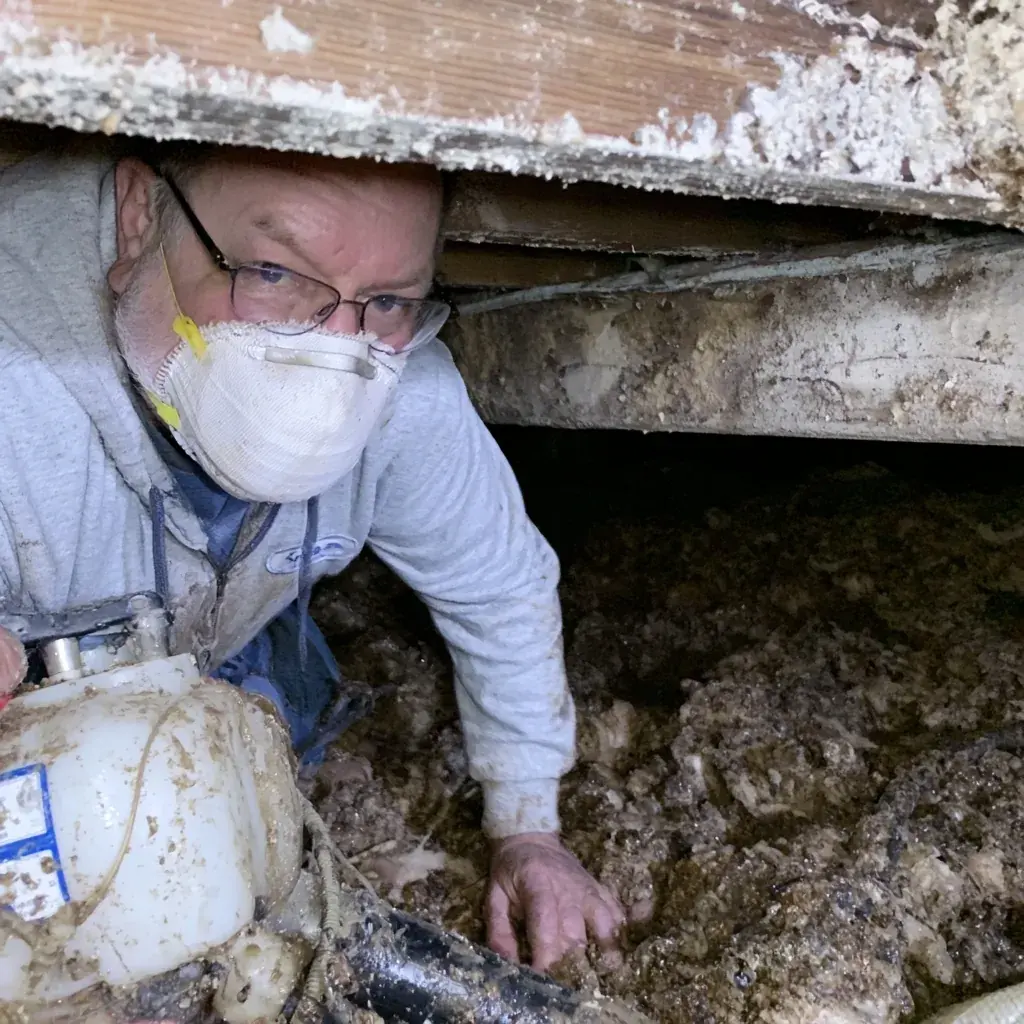
Twenty Percent Wood Moisture in a Tallahassee Crawl Space
Twenty percent is a scoreboard, not a verdict. Here is the order to work through, and what each step actually costs toward…
Read article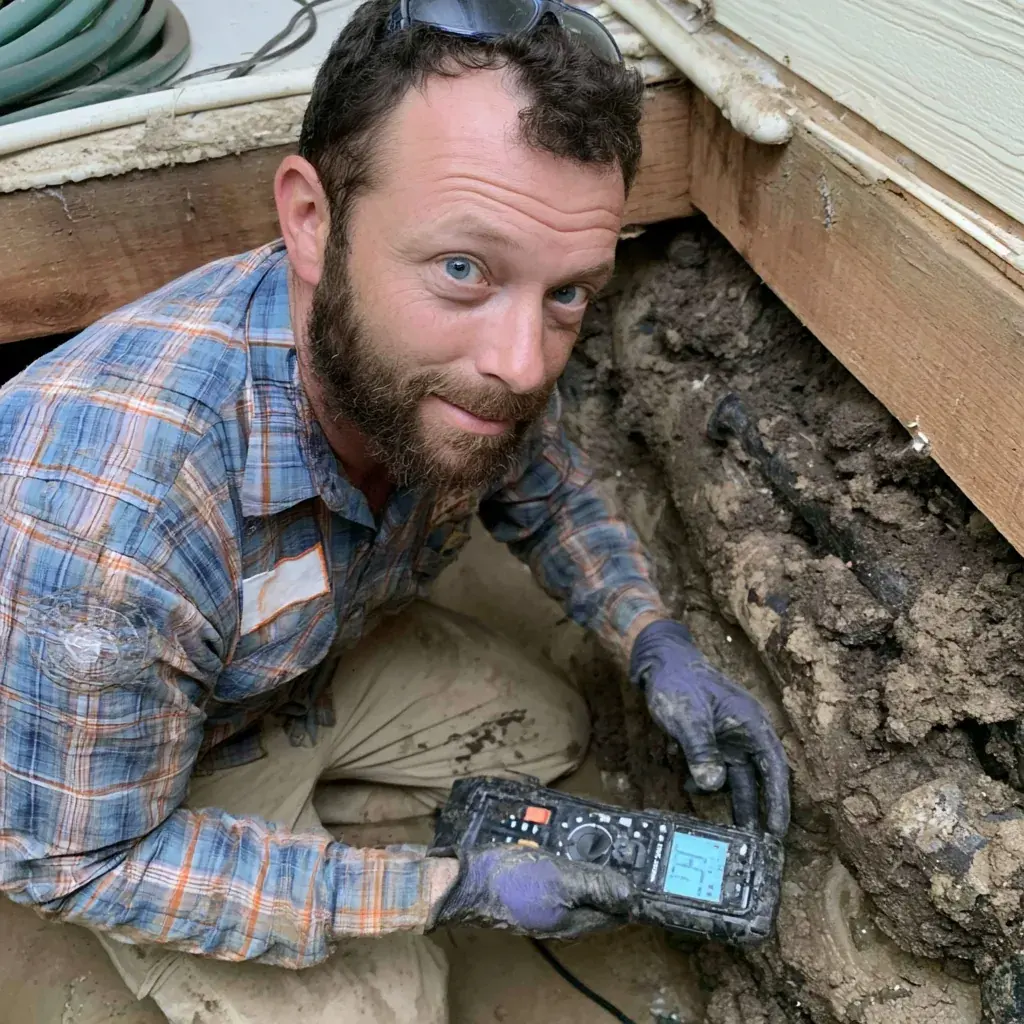
Twenty percent is the figure that lands on the report. Most of what moves it costs less than a single weekend.
Twenty percent is the figure worth holding onto. Excessively wet wood, meaning moisture sitting at 20 percent or above, counts as one of the conditions conducive to subterranean termites that has to be reported on Florida's official wood-destroying organism report. So does wood touching soil directly, cellulose debris under the structure, insufficient clearance between wood and soil, excessive crawl space moisture, construction flaws and improper grading. None of that list is a pest company's opinion. It is what a licensed inspector is obliged to write down, and it is exactly why a wet crawl space shows up as a note on a report during a sale, long before anything has actually eaten a joist.
The moisture arrives here through a specific mechanism. Red Hills clay sheds a summer downpour fast, which looks like fine drainage from the driveway, and then holds the damp underneath where sunlight never reaches it. A crawl space with bare dirt sits directly over that reservoir and releases it into the air, into the joists and into the subfloor all season long. Add a downspout emptying beside the foundation, grading sloping the wrong way back toward the house, and vents designed around a different assumption about humidity, and the result is a structure sitting at inspection-failing moisture through most of the year.
Tallahassee's twenty-percent threshold gets crossed for different reasons depending on the lot. Out toward Southwood, newer construction sits closer to grade with stormwater ponds nearby holding groundwater high after storms, while homes near Woodville Highway and Lake Munson deal with older septic fields and slower-draining soil that keeps crawl spaces damp for weeks. The licensed pros we connect you with check both conditions the same way, because the number does not care which side of town caused it.
Out toward Southwood, the picture looks different but the math stays the same: newer construction near Southwood Golf Club and the stormwater ponds off Central Park can run just as high as older streets once the humidity settles in after a summer storm. Same story on Old Bainbridge Road up toward Lake Jackson, where ground near Ford Arm rarely gets a chance to dry out. Age of the house tells you less than the ground underneath it, whether that's a Tallahassee subdivision or one of the spots just outside it.
We run moisture control right across Leon County, whether you're in Sopchoppy, Chattahoochee, Buck Lake, or elsewhere around Tallahassee. Sandy fill, wood sitting close to grade and water standing in a low corner after a thunderstorm are what keep subterranean termites going in this part of Florida, so those are what the work is aimed at.
For a house, residential pest control. If the address is a business, an apartment block or a unit being turned over between tenants, commercial pest control is the one you want.
Twenty percent is exactly where wood gets written up as excessively wet on Florida's official report, and since it is a measurement rather than an opinion, it becomes the one number on the whole document worth actually arguing about. Ask for the real readings and precisely where under the house each one came from. One elevated reading the week after a storm is a different problem entirely from a floor sitting wet from June clear through October.
Bare dirt breathes moisture into the space above it every hour of every day, and in a county pulling sixty inches of rain a year, that adds up to a great deal of water heading into the joists. A sealed ground cover, properly lapped and weighted down rather than laid loose, is the cheapest change on the entire list and the one that moves the most water. It is the first rung on the ladder, not the last one.
White or dark patches on joists carrying a musty smell mean the humidity has run high for a long stretch rather than since last week. This matters more in Florida than in most states, because wood-decay fungi earn their own line on the report here: the form covers organisms broadly rather than insects alone, so fungus counts as a finding rather than a footnote.
Water still sitting under the house days after the rain has stopped is a drainage problem, not a ventilation one, and no amount of vent work is going to fix it. On the clay side of the county, it usually means the ground is shedding sideways into whatever sits downhill, which happens to be the foundation. On the sand side, it means something is delivering water faster than even sand can absorb it, and that is nearly always a downspout. Treating whatever is breeding in that water changes nothing about the water itself.
Wood moisture readings taken at several points, relative humidity checked in the space, and a look at exactly where water is getting in. Numbers come first, since they decide whether this is a ground cover job or a drainage job.
Polyethylene sheeting goes across the soil, run up to the piers and foundation walls, with the overlaps sealed rather than left loose. A partial cover leaves the wettest corner carrying on exactly as it always has.
Downspout extensions, grading corrections sending water away from the foundation, and any plumbing leak fixed for good. Ventilation cannot dry out a crawl space that keeps being refilled from outside.
Vent work gets decided only after the water is handled. Options at that point include additional vents, temperature-controlled vents, or closing the vents entirely as part of a sealed system running a dehumidifier. All three are legitimate choices, just for different crawl spaces.
This work sits with a pest company because the state's own conducive-conditions list is really a moisture list. Damp wood, soil contact, debris, poor clearance and bad grading are exactly what draws subterranean termites and feeds wood-decay fungi, and they are the notes that turn up on a report during a sale. Fixing them costs less than treating whatever arrives afterward, and unlike a treatment, dry wood never needs renewing every year.
Conditions conducive to wood-destroying organisms have to be reported on Florida's wood-destroying organism inspection report, form DACS-13645. That list covers wood in direct soil contact, cellulose debris under the structure, excessively wet wood at 20 percent moisture or above, insufficient clearance between wood and soil, excessive under-floor moisture, construction flaws and improper grading. Wood-decay fungi earn their own line on that report in this state, a difference worth knowing: Florida's form covers fungi and beetles, not insects alone. Every item on that list is a moisture or housekeeping problem, which is exactly why they are fixable before a sale rather than fatal to one.
FDACS states plainly that most Florida homes over 10 to 15 years old show some evidence of wood-destroying organisms, and that a clear report is neither sought after nor required to close. The report is not a warranty, it clears no structure, and issuing a later no-evidence report once evidence has already been found breaks the rules outright. Read the conditions printed on the reverse, and order the report early in the transaction rather than late.
Prices depend on the pest, the property, and how bad it's gotten. A small ant problem in Betton Hills costs less to fix than a full termite plan near Lake Jackson.
| DIY Traps | Store Sprays | Licensed Pros |
|---|---|---|
| One-Time Visit | Pest control pros serving Tallahassee from Midtown to Bradfordville and Killearn | an estimated $225–$865 |
| Quarterly Plan | Pest control across Tallahassee from Killearn Estates to Southwood | an estimated $265–$1240 |
| Termite Bond | Bed Bug Control Near FSU, FAMU and TCC Student Housing | an estimated $400–$1980 |
| Wildlife Removal | Pest pressure near Lake Jackson, Killearn, and Betton Hills eases but never stops each winter | an estimated $635–$3300 |
Ask the licensed pros we connect you with for a firm number before agreeing to anything. A phone estimate without seeing the property, from Midtown to Bradfordville, is only a guess.
Because that is precisely where wood gets classified as excessively wet and turns into a reportable condition conducive to subterranean termites on Florida's official report. It is a bright line on a document a buyer's lender will actually read, which makes it a number worth managing rather than arguing over.
It depends entirely on the crawl space, and the decision comes after the water is dealt with. Some spaces do well with extra airflow or temperature-controlled vents. Others do better sealed with a dehumidifier, since on a humid Big Bend afternoon an open vent can bring in air that condenses straight onto cool joists. Anybody answering this without going under the house first is simply guessing.
Often it is the single biggest improvement available, particularly where the soil was bare to begin with. It stops being enough the moment water is entering from outside, a plumbing leak is running, or the space has no path for humid air to escape.
The overlap is exactly the point. Moisture is the condition producing termites, wood-decay fungi, crickets and roaches under a house, and it falls to a pest inspector to record it. Whoever ends up doing the work, it belongs in the same conversation as the termite plan.
No. Drying it out halts the process and protects whatever is still sound. Rotted or infested framing is a repair question in its own right, and it is worth knowing the official wood-destroying organism report is not a structural damage report and says nothing about wood-decay fungi damage.
A crawl space treatment folded into a service often runs an estimated $85 to $150, while ground cover, vent work and drainage corrections get priced against the square footage and whatever has to be cleared to reach it. Guide figures only, since crawl space height and access change the labor more than anything else in the job.
Local knowledge beats a national script. A pro who knows Leon County's mild winters barely slow pests down, and that swarming termites near Lake Jackson or Bradfordville follow the same February-through-May pattern as the rest of the Southeast, is answering from experience, not a script written for somewhere colder.
Copperheads west of Tallahassee make snake awareness a real local, not statewide, concern
Twenty percent is a scoreboard, not a verdict. Here is the order to work through, and what each step actually costs toward…
Read article
A search box hands you ads. These are the questions that actually separate one company from another, the answers worth hanging up…
Read article
Two separate problems travel under one name: the water producing mosquitoes, and the shade the adults sit in all day. Skip either…
Read articleOne call reaches a licensed local pro, an inspection that costs nothing, and a written scope before anything at all is treated. You are free to walk away at the end of it.
Call (850) 388-6192