Apartments & Multifamily
Apartments, duplexes and rental portfolios
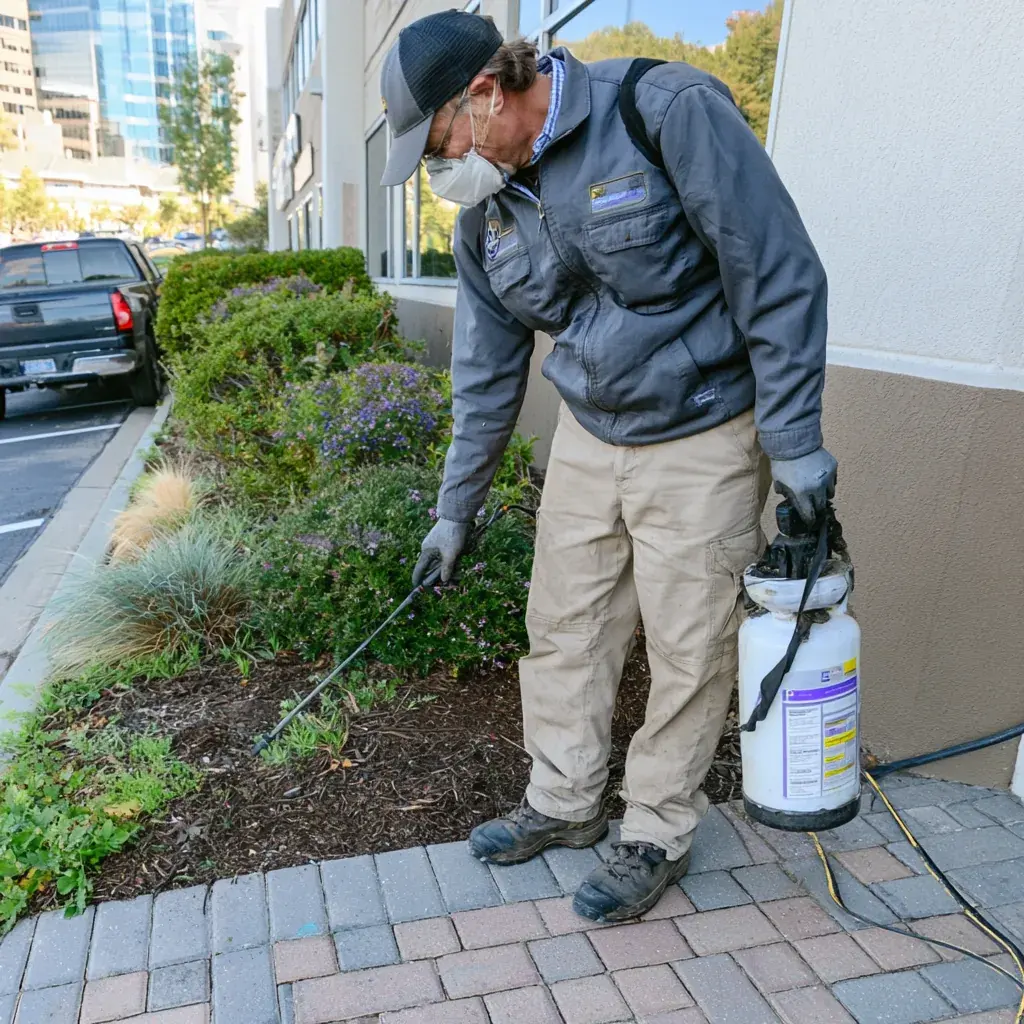
Every choice in the plan starts from one constraint: the occupant can't step outside.
A healthcare or senior living pest program is planned around one reality: the people inside often can't leave the room. That pushes product selection toward low-odor formulations and contained placements, pushes timing to fit around shift changes and meal service, and raises the bar on records -- what was used, where, at what rate, and who was told about it. The licensed local pros we connect you with work from a floor plan and sign off on every visit.
A restaurant can clear a room for service. A care home can't. A resident in bed, a patient on oxygen, someone recovering from surgery or living with dementia isn't stepping outside for an hour, and an unfamiliar smell in the room can cause distress that lasts days past the visit. Everything in the plan follows from that one fact.
So the whole method shifts shape: more inspection, more monitoring, more exclusion, and treatment kept fully contained -- gel bait tucked in a void, a monitor under a fixture, a vacuum in place of an aerosol, dust in a wall cavity that gets sealed right after. Broadcast application in an occupied resident room isn't an option on the table; it's a complaint waiting to happen.
The same logic carries over to outpatient clinics and dental offices, where the constraint is the treatment room, sterile storage and equipment rather than a resident. Nothing goes anywhere near a surface that touches a patient, and anything beyond a contained placement waits until the practice closes for the day.
Senior living communities and memory care campuses outside Tallahassee proper draw on the same referral network that covers Monticello, Chaires, and Miccosukee, where a facility manager calling about a resident wing gets the same quiet-hours scheduling and documentation trail as one near Wacissa Springs or along Old St. Augustine Road. The licensed pros we connect you with treat a shared dining room or a memory care corridor with the same patient-surface restrictions as a clinic treatment room, timing anything beyond spot placements to overnight staffing windows so residents and visitors never see the work happen.
Low odor isn't a marketing phrase here -- it's a hard specification. Formulation, application method and quantity all get decided around the fact that someone with a respiratory condition will be breathing that air an hour later, and a visiting family member will notice anything unusual right away.
Disruption gets managed through scheduling, not through speed. Working around meal service, medication rounds, shift changes and visiting hours makes a visit take longer, but it also produces far fewer complaints. Nursing and housekeeping staff briefed in advance on which wing is being worked, and what to expect, are also the ones who'll report next month's first sighting instead of assuming someone else already did.
That same discretion applies whether the facility sits in Midtown near Lake Ella and Lafayette Park, close enough to brief staff between rounds without disturbing residents, or further out toward Bradfordville Community Center off Meridian Road, where a longer drive doesn't change the standard. Tallahassee clinics and senior living communities keep different hours than a private home, so the licensed pros we connect you with schedule around meal service and shift changes, not the other way around, and leave the same written record either location would need for its next inspection.
Bed bugs travel in with belongings -- a new resident's furniture, a suitcase pulled from a family home, a recliner donated in good faith, a bag of clothes returned from a relative's house. Tallahassee sees more of this than a settled market would, because turnover tied to the academic calendar keeps household goods moving through the city faster and more often than usual.
What makes senior living hard isn't the insect, it's the reporting. Bites on thin skin get blamed on something else, residents with cognitive decline can't describe what they saw, and some say nothing at all out of fear of being blamed or relocated. So detection has to be proactive: seam inspection on mattresses and chairs at intake, encasements, interceptors under bed legs, and housekeeping trained to check a seam rather than just the floor.
Once a room tests positive, treat the run of rooms around it plus the shared laundry, not just the room that reported it. Heat where it's available and safe, contained treatment where it isn't, encasements afterward, and a follow-up schedule that doesn't stop the first quiet week in.
In this sector the record isn't an afterthought -- it's a large part of what you're actually paying for. When a family member, an administrator or a surveyor asks what's been happening, the answer needs to come from a dated file, not a recollection. That file protects the facility too, since it shows an ongoing pattern of monitoring and correction rather than a reaction to a single complaint.
What belongs inside it: a floor plan with numbered monitors, a dated log per visit naming the areas covered, findings by location, products used with rate and placement, staff who were notified, corrective actions requested, and whether the last request actually got completed. Trend data from the monitors matters more than any one visit, because it shows whether pressure is actually falling.
It should also capture the physical problems that belong to the facility -- a failing door sweep on a service entrance, a dumpster pad holding water, an ice machine with a slow drain, a kitchen dry store with cartons left on the floor. Those are the recurring causes, and a log naming them turns the next budget conversation into a simple one.
Care homes and senior living communities generally run monthly, with the kitchen, laundry, waste areas and exterior worked every visit and resident wings covered on a rotation, plus a same-week response arrangement standing by for any bed bug report. Outpatient clinics and dental practices commonly run every other month or quarterly instead, weighted toward break rooms, waste storage and the exterior.
For budgeting, a clinic or small practice usually lands around an estimated $110 to $220 a visit, while a residential care community running a commercial kitchen, laundry and multiple wings gets quoted on floor area, wing count and monitor count together. Bed bug work in an occupied facility is always priced apart from routine service, since the labor involved isn't comparable.
One clause worth writing into any agreement: a defined response window for a suspected bed bug report, plus confirmation the same technicians keep attending. Familiarity with the floor plan and the staff is worth more here than in almost any other commercial setting.
Copperhead-aware pest checks for homes near Betton Hills and KillearnOx Bottom, Betton Hills and Killearn Estates. Bradfordville and Golden Eagle homes near the treeline get regular pest attention
Student turnover near Florida State and Florida A&M keeps bed bug calls steady in shared housing year-round. The licensed pros we connect you with handle that the same way they'd handle a house off Thomasville Road.Nobody bills for the initial visit, and you see the scope in writing first. All the bands are published on the pricing guide, and the commercial overview lays out how the visits get organized.
Apartments, duplexes and rental portfolios
Multi-site accounts and owner reporting
Docks, racking and inbound freight
Inspection and monitoring, yes. Application, no. Anything applied happens with the room empty, using contained placements in voids and under fixtures, with re-entry confirmed before the resident's back. If a resident genuinely can't be moved even briefly, the honest answer is to schedule around their care rather than try to work around the person.
Quietly, and scoped tightly. Inspect the reported room plus the rooms around it and the shared laundry, put encasements and interceptors in place so detection continues afterward, and brief staff strictly on a need-to-know basis. Panic travels faster than the insect ever does, and a facility with a written protocol ready to go handles it without any scene.
A floor plan with numbered devices, a dated log per visit showing areas covered and findings by location, products used with rate and placement, which staff got notified, and the corrective actions requested along with their status. Read across several months, the monitor counts show whether pressure is actually declining, which is the part a surveyor or family member really wants to know.
Usually not. A small outpatient or dental practice with no food service often holds up fine on every other month or quarterly, focused on the break room, waste storage and the exterior. Residential care is different -- it carries a commercial kitchen, laundry, waste volume and residents who can't always report clearly, so monthly is the sensible floor there.
No, and that's worth stating outright in the agreement. Formulation, method and quantity get chosen around the fact that someone with a respiratory condition will be breathing that air shortly after. Where a job genuinely calls for something more noticeable, the answer is a different method entirely, not a warning sign taped to a door.
Call to arrange a walk of the kitchen, laundry, waste areas and one wing, and you'll come away with a monitor map, a scheduling plan that respects care routines, and records ready to hand to a family member.
Call (850) 388-6192