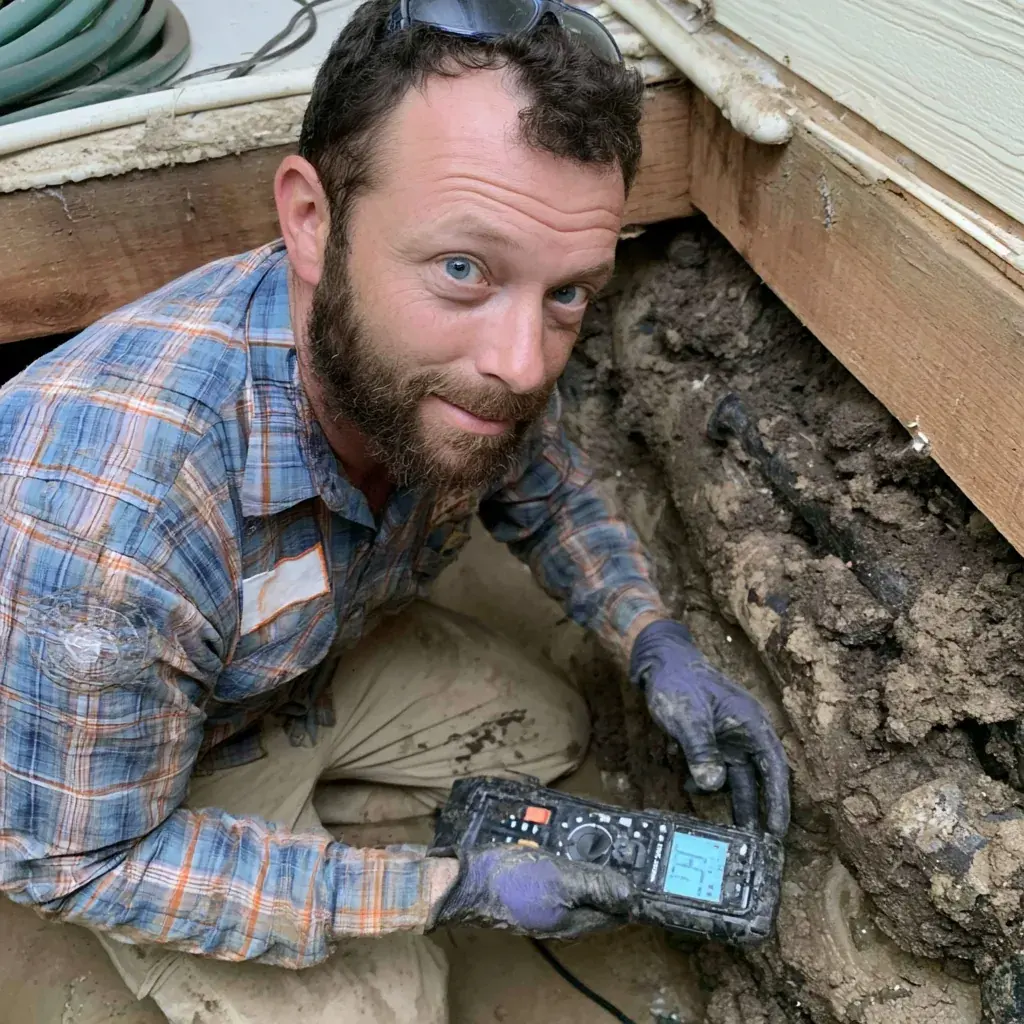
This is the part that trips sellers up. Nobody has to actually find a termite for a termite line to appear on the report. Wood sitting at twenty percent moisture or above counts as excessively wet, excessively wet wood is a reportable condition conducive to wood-destroying organisms under Florida rules, and that line lands on the form because conditions happen to be right for it, not because anything is currently eating the house. Which reads like bad news and is closer to the opposite: a condition is something that can be changed, and most of the ways to change it cost less than a single weekend.
Step one: confirm the number is real
A meter held to a joist tells you about that spot, on that particular day. One elevated reading taken the week after a tropical system came through is nothing like a floor system that stays wet from June clear through October, and the two situations call for different money spent solving them. Ask for multiple readings with locations written down, and ask what the inspector believes the source actually is. A lone number with no location attached is not information. It is a headline.
Step two: read the full list, most of it is housekeeping
Wet wood is only one line among several. The rest cover wood in direct contact with soil, cellulose debris left under the structure, insufficient clearance between wood and soil, excessive under-floor moisture in general, construction flaws, and improper grading. Wood-decay fungi get their own line on a Florida report, which genuinely sets it apart from a lot of other states: the form here covers organisms broadly rather than insects alone.
Look back over that list and count how many entries are really about drainage and tidying rather than construction. Form boards the builder never bothered to remove. A pile of offcuts left over from a 2011 bathroom job. A flower bed somebody kept topping up until it sloped right back toward the wall. Every one of those was cheap to create in the first place and is just as cheap to undo, which is exactly why the first pass at a moisture problem should never be the expensive one.
Step three: spend the cheap money, then remeasure
Water comes first, every time. Get the downspouts extending properly clear of the foundation, clear out the gutters, and regrade any bed still sloping back toward the wall. In this county, a surprising share of elevated readings trace back to one downspout emptying two feet from a vent, and the soil decides how bad it gets from there: Red Hills clay north of town sheds a downpour fast and then holds onto the damp underneath where nothing can dry it out, while the sandy flatwoods to the south and west let it pass straight through and settle a foot down instead. Either way, it ends up under the floor.
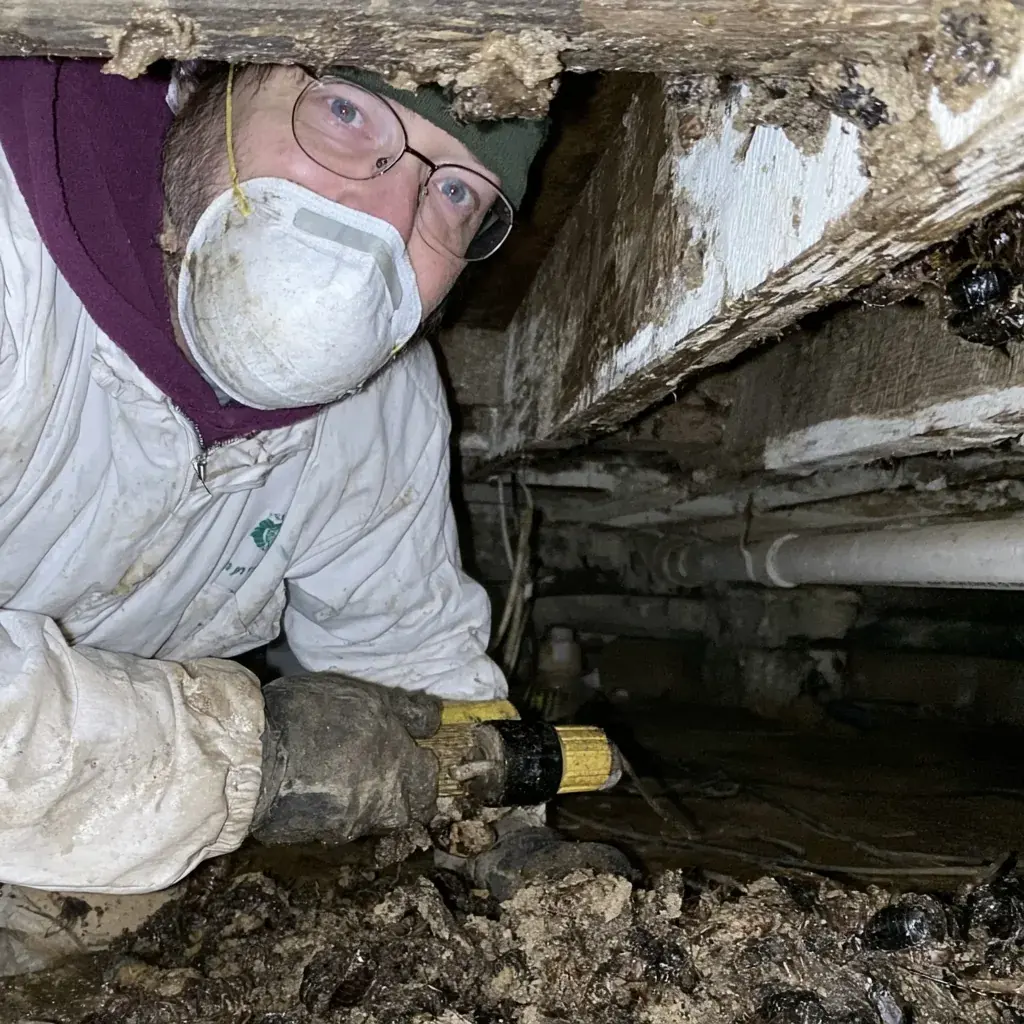
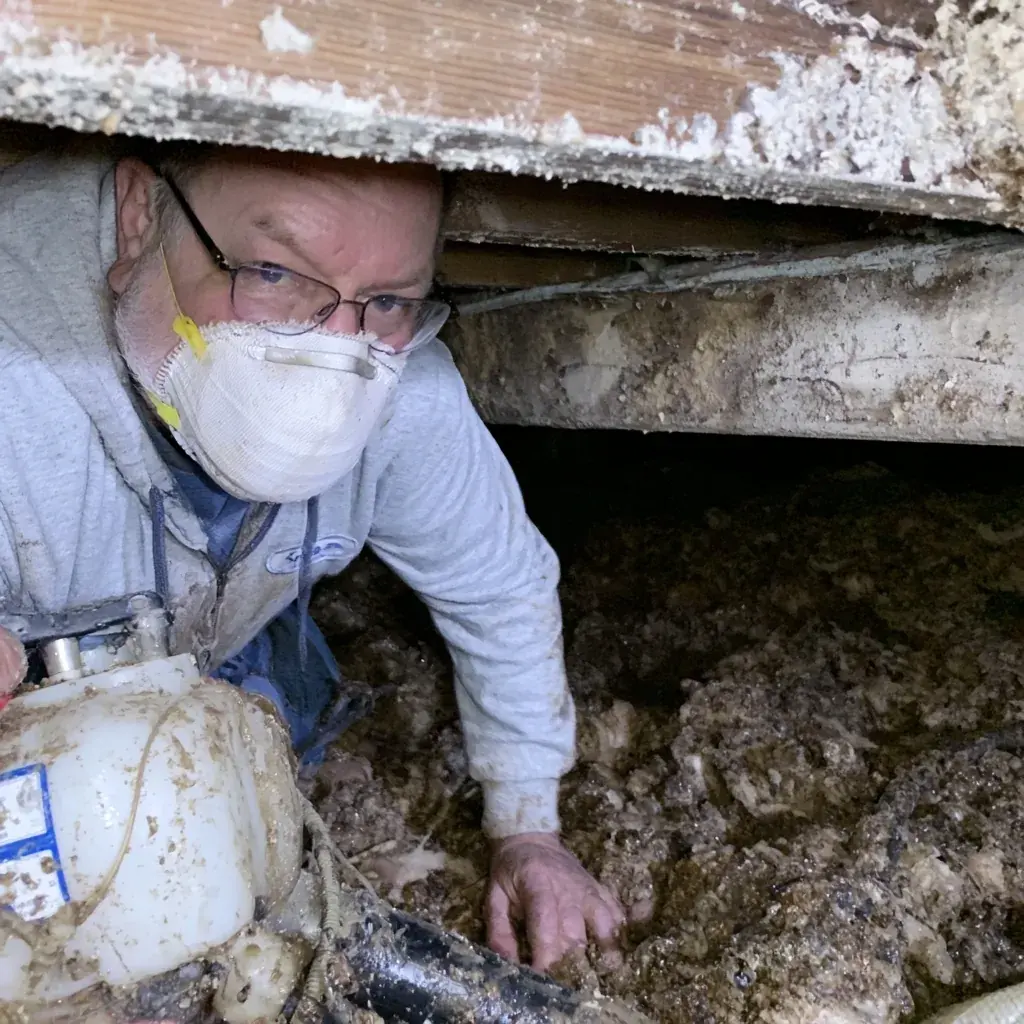
Then the ground. A continuous vapor barrier over bare soil, properly lapped and weighted down rather than tossed over like a picnic blanket, stops the ground breathing straight up into the joists. Pull the cellulose out while down there anyway: scrap lumber, cardboard, old form boards, roots. Confirm the vents are genuinely open and not buried behind an azalea or blocked off by stored boxes, and that no corner of the space sits stagnant. Then give it a few weeks and measure again before spending another dollar.
Step four: only if the number still has not moved
Moisture control is its own service line around here for good reason, and it works as a ladder rather than a single product. Poly ground cover first, then vent work, then temperature-controlled vents, then full encapsulation with the vents boarded up and a dehumidifier running. Encapsulation does genuinely fix the problem, and it is priced like something that genuinely does. The mistake is jumping straight to the top rung. Climb one step, wait, measure, and only take the next step if the number is still stuck. Crawl space work in this area often starts around an estimated $85, and that is a guide figure rather than a quote.
Why the height under the floor moves the number by itself
Prevention guidance calls for beams at least eighteen inches clear of the ground and exterior woodwork at a minimum of six inches above grade. Neither number is arbitrary. Part of the reasoning is keeping the space inspectable, and part of it is that the damp concentrates in the first few inches above the soil. The identical joist will read higher at eight inches than at eighteen, in the same house, on the same afternoon, which is worth remembering before deciding that one end of the house has a problem the other end somehow does not.
Put the readings in writing before you agree to anything
If a report comes back saying wet wood, get the actual figures, the locations and the inspector's read on the source before anybody offers a quote. Then put one question to whoever is quoting: what does this work change about the source, as opposed to the wood itself. If the answer only ever touches the wood, what is being bought is a symptom. Any agreement for wood-destroying organism work in this state has to be in writing regardless, so there is no reason to settle for a verbal summary of a crawl space in Woodville, Killearn Estates or anywhere else in the county.
Dealing with this in your home?
Bed bugs travel in luggage and boxes, not seasons, so Leon County calls do not slow down each winter the way ant and roach calls do. Semester turnover near Tallahassee Community College and the moving trucks along Tennessee Street give this city its own steady source of new introductions every August and January.