Every new house in Florida gets treated for termites before the slab is poured, because the building code requires exactly that. The treatment arrives with a warranty from whichever pest control company carried it out, and that warranty runs a defined term. On an awful lot of houses, the term is one year from the treatment date.
When it ends, nothing whatever happens. No letter necessarily lands, nothing about the house looks different, and it feels no less protected on the Tuesday than it did on the Monday. The first year is simply finished, and whatever comes next rests entirely with the owner.
What year two actually amounts to
It amounts to a renewable service agreement, taken up by the homeowner under their own name, on a house that until that point sat under the builder’s arrangement. Around Florida these get sold and discussed as termite bonds, and that term stretches across a range of documents rather than describing one standard product.
A renewal normally carries a periodic inspection along with an obligation on the company to re-treat wherever activity turns up. Everything else varies enormously, and that is exactly where reading the document matters more than shopping on price.
Why it normally goes back to the original company
Whoever treated the ground before the concrete went down knows what went in, where it went, at what rate and on which date, and they are holding the records. Carrying on with them is usually both the cheapest and the simplest route, and the transition is paperwork rather than physical work.
Switching to a different company is perfectly possible, and it generally brings a fresh inspection and sometimes a fresh treatment along with it, because no sensible operator warrants work they neither did nor can see. None of that is a scare tactic. It is simply why the original treater tends to be the better deal in year two specifically.
What happens when nobody picks it up
That soil treatment does not evaporate on the anniversary date. It breaks down gradually, at a pace set by the product, the soil, and how much water has passed through it, and on Leon County ground taking sixty inches of rain a year, the process at the perimeter is not remotely slow.
What does vanish immediately is the obligation. With no agreement in force, nobody is required to inspect the house and nobody is required to treat it should termites turn up. Termite damage sits excluded from a homeowners policy as gradual loss, which leaves an uncovered house with an expired warranty genuinely uninsured against the one pest that eats the building itself.
Read it as an agreement, because that is what it is really
The single distinction that matters most is what the document promises once termites appear. Re-treatment only means the company comes back and treats again at no charge while owing nothing at all toward damage, and it is by far the commonest form sold. Re-treatment plus repair puts new damage right up to a stated limit, costs more, and is not offered by every company.
A third possibility is an agreement carrying no warranty whatsoever, which has to be stated plainly within the document itself. Two quotes landing at the same price can be two completely different products, and the only way to tell them apart is reading what the document says happens after the word if.
The date worth pinning down before you sign
Find the treatment date rather than the closing date. That notice fixed near the water heater or the electric panel records who treated the house and when, and it is the date the original warranty actually ran from. On a house that stood finished for months before selling, those two dates can sit a very long way apart, and the buyer is frequently working from the wrong one.
Once you have that date, you know how much of the first year you genuinely received and how soon a renewal falls due. Five minutes of work, routinely put off for years.
If the coverage has already lapsed
Get the inspection before you get any quote. A house uncovered for a few years may well be entirely clear, in which case a new agreement is straightforward and the whole conversation comes down to price and terms. It may instead have activity, in which case that is something to learn before signing anything rather than after.
Either way, the position improves the moment somebody has genuinely looked. Lapsed coverage is a common situation around here rather than an unusual one, and it stays fixable at nearly any stage short of damage that has already turned structural.
Dealing with this in your home?
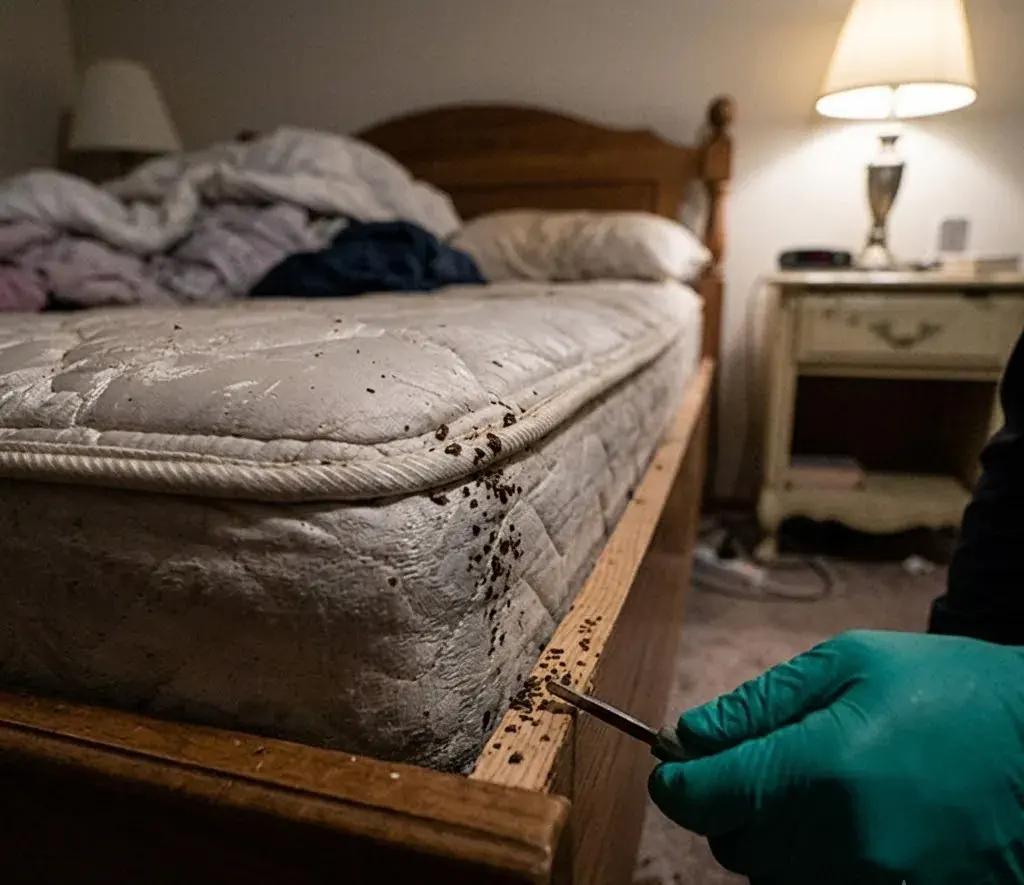
Bed bugs travel in luggage and boxes, not seasons, so Leon County calls do not slow down each winter the way ant and roach calls do. Semester turnover near Tallahassee Community College and the moving trucks along Tennessee Street give this city its own steady source of new introductions every August and January.