One afternoon of work on a Tallahassee house clears four separate pest problems together, and not a drop of pesticide comes into it. Clean out the gutters. Packed solid with pine needles, a gutter stops being a maintenance annoyance and becomes something else: somewhere to live, somewhere to breed, a supply of moisture, and in the end the reason a carpenter bee finds the fascia soft enough to drill.
Pine straw is what makes this local
Elsewhere in the country, gutters fill with deciduous leaves that arrive across a few weeks each fall and get cleared in one session. What falls here is longleaf and loblolly needles, shedding through most of the year, and on top of that a good half of the county's yards have pine straw spread as mulch. The stuff is inexpensive, it suits the look of a house here, it stays put in a bed on sandy soil, and it earns its place as the local mulch for entirely sound reasons.
The trouble lies in what a needle mat does once it is inside a trough. Needles knit into each other rather than lying flat, so what forms is a sponge holding water instead of a plug stopping it. Water sits in that mat, the mat stays damp between rains, and organic material breaks down inside it. That is an entirely different object from a gutter with a few leaves collected in one corner.
Smokybrown cockroaches treat a gutter as housing
Smokybrown cockroaches are an outdoor species through and through. They live in leaf litter, mulch, tree holes, woodpiles, and, handed the opportunity, gutters. A wet needle mat hands them shelter, moisture and decaying material to feed on, all of it three feet from the roofline and inches from a soffit vent. They fly well and they come to lights, which is why the ones people meet indoors show up near a porch door on a summer evening rather than in a pantry.
Which matters, because the treatment everybody instinctively reaches for is the wrong one entirely. Spray a kitchen and you have done nothing whatever to a population housed in a gutter and a mulch bed. What does move the needle: emptying that gutter, dragging the pine straw back away from the foundation, and shutting the gaps at the soffit and around the porch light. So when a large reddish brown roach appears indoors in July and nothing points to it breeding in the house, look up before you look under the sink.
Mosquitoes need far less water than people think
A blocked run of gutter holds standing water for days after a thunderstorm passes, and remarkably little water is required. A container the size of a bottle cap will produce mosquitoes, which makes a twenty foot run with a low spot a full nursery. Since it all sits above head height, nobody ever inspects it, and that is precisely how a yard being treated keeps producing mosquitoes regardless.
Where somebody spends real money on yard treatment and gets an indifferent result, the source is nearly always something nobody drained. Gutters, a tarp thrown over a trailer, a plant saucer, a corrugated downspout extension lying flat, a wheelbarrow left the wrong way up. Draining costs nothing and beats spraying on every measure except effort.
Fascia that never dries is a carpenter ant problem in waiting
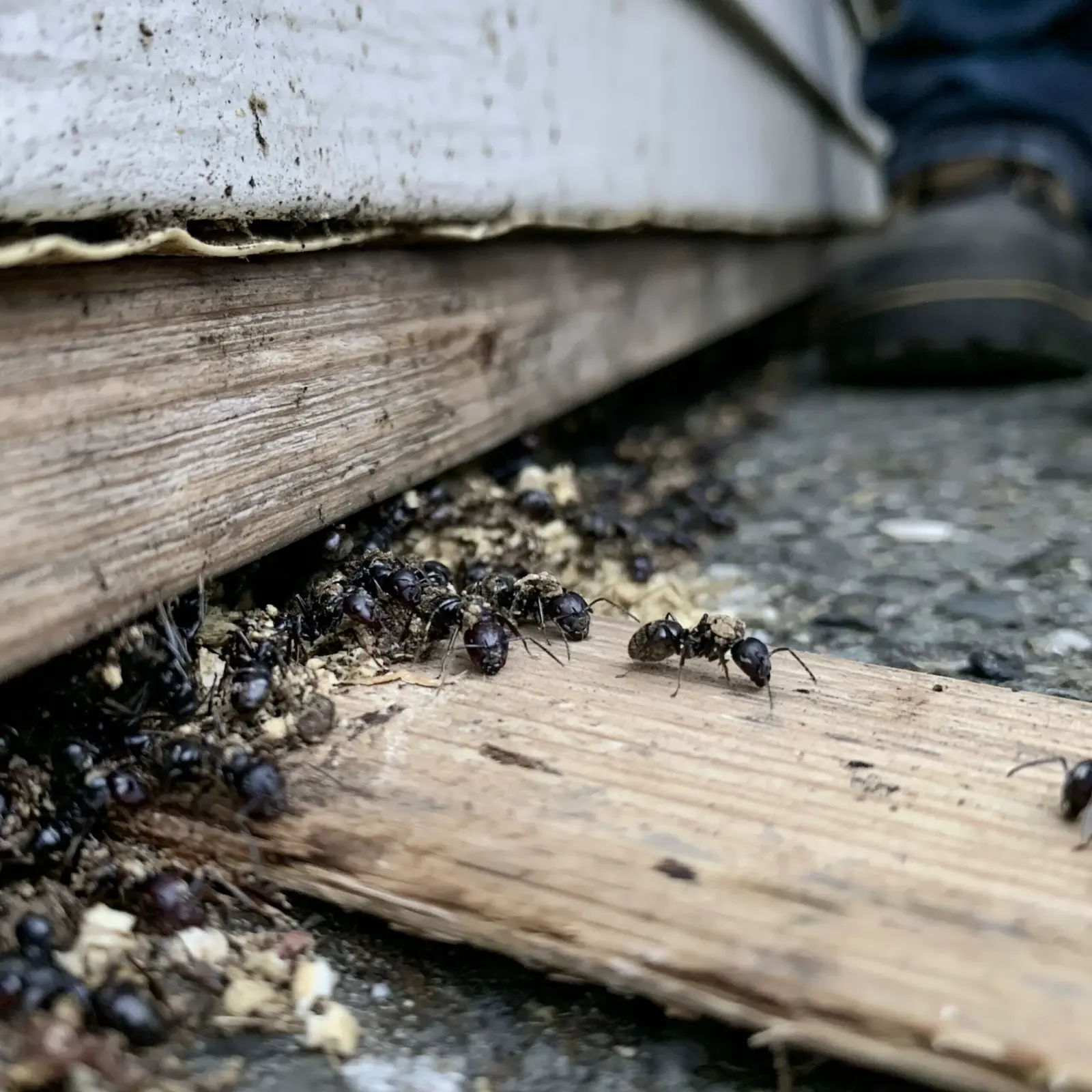
Once a gutter blocks, the overflow runs behind it, down the fascia and into the soffit. Boards in that situation stay damp for long stretches, and damp is the exact condition carpenter ants are looking for. Wood is not food to them; they hollow it out to nest in, and what they want above all is timber that moisture or decay has already softened for them.
Which is why a carpenter ant trail running along a roofline reads best as a leak report. Large black ants emerging from a soffit corner in June are telling you exactly where the water is going. Fix the water and that nest site stops being attractive at all. Treat the ants on their own and you will meet their replacements next year, in the same corner.
Carpenter bees finish off the job
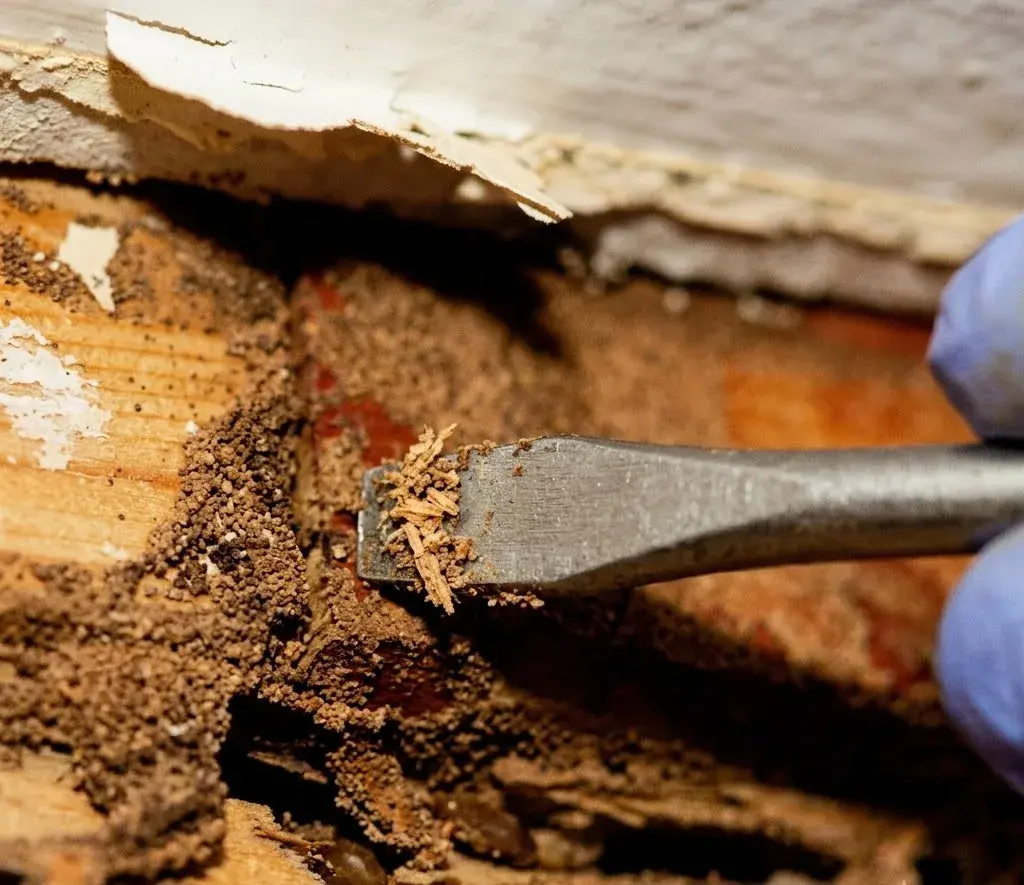
Carpenter bees drill into bare, unpainted or weathered softwood, and their preferred addresses are fascia, rake boards, porch ceilings, deck rails and the underside of eaves. A board kept wet by a failed gutter across two seasons has lost its paint film and gone soft, which is precisely what they are after. The holes come out round, roughly the diameter of a pencil, generally with a stain running down the wood beneath them.
Carpenter bees sit among the insects that can be noted on a Florida wood-destroying organism report, so none of this is purely cosmetic. The secondary damage outruns the drilling by some margin: woodpeckers tear the galleries open hunting larvae, converting a neat hole into a shredded strip of fascia. Paint rather than stain, laid on sound dry wood, is the deterrent that genuinely works, and it only holds so long as the gutter above is doing its own job.
The afternoon itself, in order
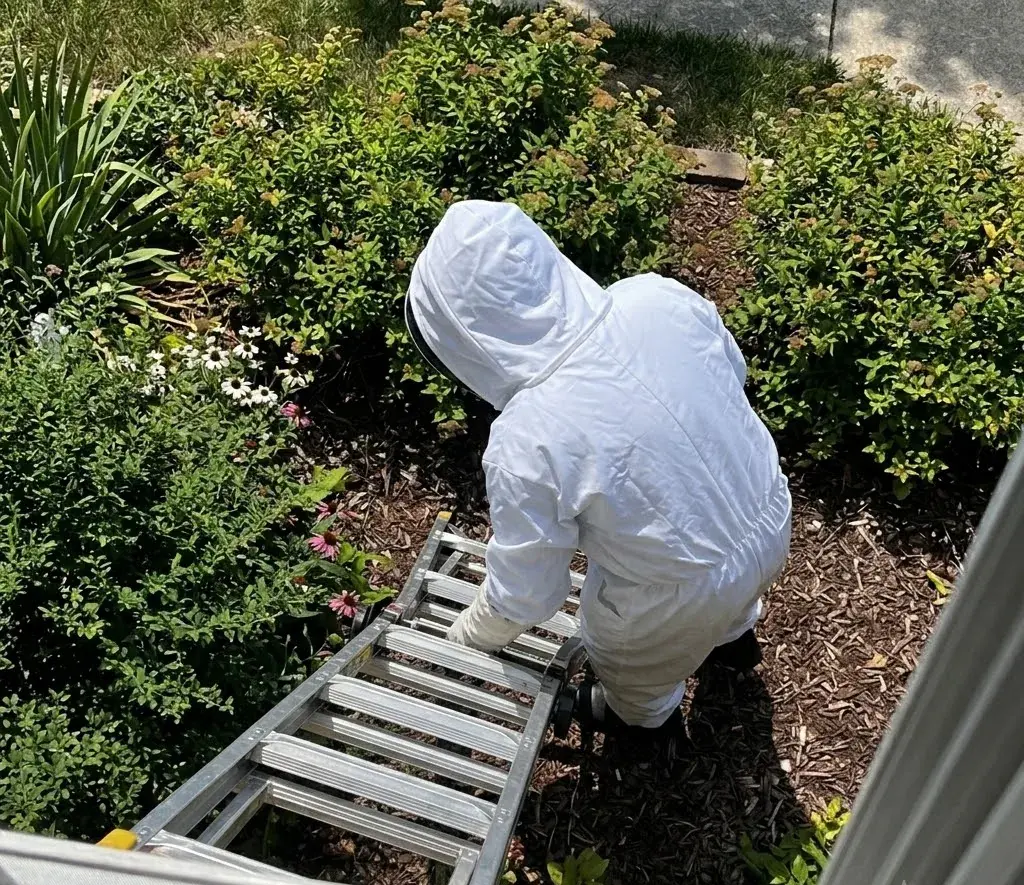
One person, one ladder, the better part of an afternoon.
- Clear the gutters by hand into a bucket, needles and all, then check the low spots for standing water afterward.
- Flush every run through with a hose and watch where that water genuinely ends up.
- Extend each downspout so it empties several feet clear of the foundation rather than at the wall corner.
- While the ladder is up, read the fascia and soffit: soft spots, paint gone, a stain line, round holes.
- Pull the pine straw and mulch back until none of it banks against siding or wood trim.
- Walk the yard emptying anything holding water, saucers, tarps and the wheelbarrow included.
- Paint whatever bare softwood turned up, once it has properly dried.
What none of this will fix
Gutter work will do nothing about German cockroaches in a kitchen, bed bugs, fire ants out in the yard or termites under a slab, and it substitutes for an annual termite inspection not at all. What it does accomplish is removing four separate reasons pests are pressing against the outside of the house, which is where very nearly all of them begin.
Get somebody to hold the ladder, and where the roof is steep or the house runs to two stories, pay a person to do it rather than discovering the hard way why that was the advice. If the gutters come clear and roaches are still turning up indoors, or a carpenter ant trail persists with no leak you can locate, that is worth an inspection. The licensed local pros we connect you with cover Tallahassee, Killearn Estates, Bradfordville and Buck Lake, and anybody who reads your roofline before your kitchen is the one worth holding onto.
Dealing with this in your home?
Bed bugs travel in luggage and boxes, not seasons, so Leon County calls do not slow down each winter the way ant and roach calls do. Semester turnover near Tallahassee Community College and the moving trucks along Tennessee Street give this city its own steady source of new introductions every August and January.