Florida ranks among the handful of states requiring termite protection on new residential construction as a straight condition of the building code, rather than leaving it as something a builder may take or skip. Section R318 of the Florida Building Code is where the requirement lives, and it accepts several routes to compliance: a registered termiticide applied to the soil, a bait system, treated wood, or another approved approach labeled for preventing termites in new construction.
For a buyer, what that adds up to is this: something was done to the house before the slab ever went down, a licensed company put its name to it, and a record exists somewhere. Remarkably few owners have read their own. Twenty minutes is well spent on it, because that record says what is protecting the building and, far more usefully, when the protection started running down.
Soil treatment happens in stages, never in one visit
A soil pretreatment goes in as the build moves along rather than in one session, because the areas needing treatment are only exposed at specific moments. The horizontal treatment lands on the prepared fill and the footing trenches before the vapor barrier and the concrete seal them away. The moment that slab is poured, the ground underneath becomes unreachable for the entire life of the building, so the timing has no give in it whatsoever.
Once backfill and final grade are done, a vertical treatment goes in around the outside of the foundation, and any plumbing or utility penetration cut afterward gets dealt with too. On an ordinary house that adds up to two or three separate trips spread over weeks, all coordinated against the concrete schedule, which is exactly how a rushed build occasionally ends up missing a stage.
The certificate goes to the building department, not to the owner
Once the treatment is complete, the pest control company issues a Certificate of Compliance to the local building department. That is the document the inspector is looking for, and it names the company, the product used and the date it happened. Nobody hands it to the buyer as a matter of course, which is precisely why so few owners have any idea it exists.
A copy can be requested, and it should be, because nothing else tells you what actually went into the ground. Where the builder chose a bait system or a physical barrier instead of a liquid soil treatment, that shows up on this document as well, and it changes what maintaining the protection involves from then on.
And a permanent notice sits inside the house
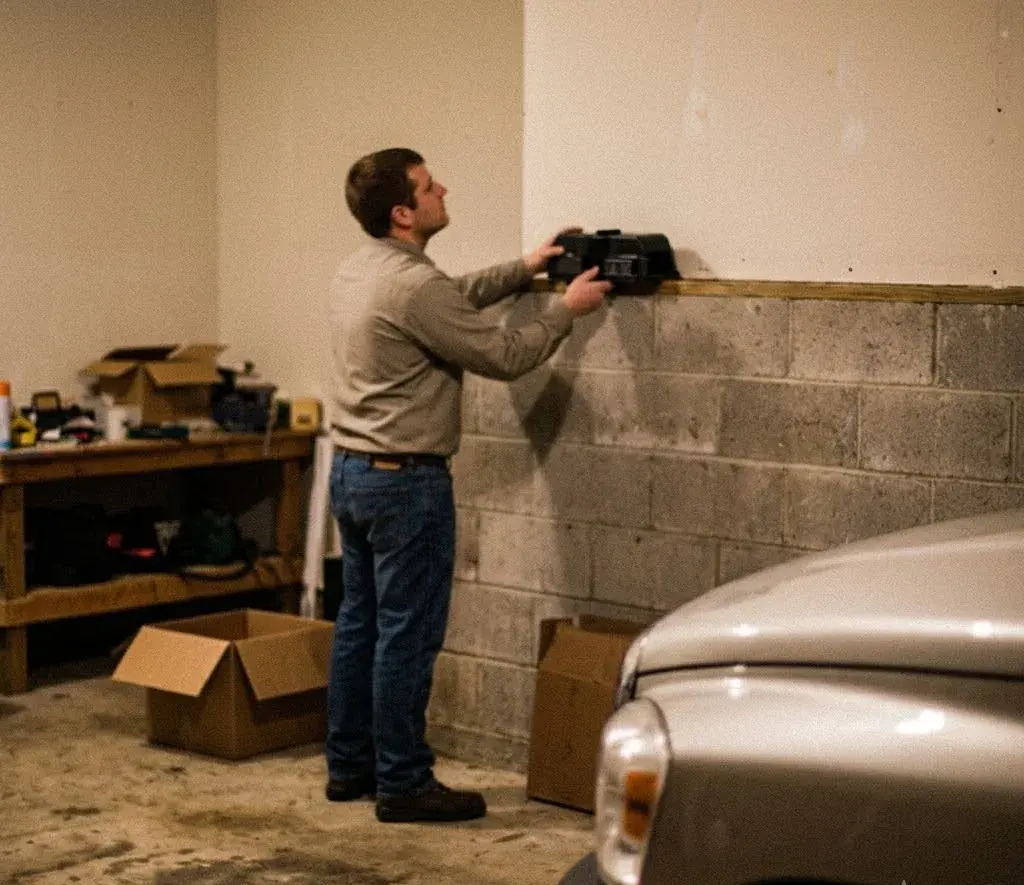
The code additionally requires a durable notice fixed inside the building, next to the water heater or the electric panel, recording the termite protection. Go find yours. It is normally a small sticker or metal plate that most households have walked past for years without ever stopping to read.
That notice carries a date on it, and the date is the entire point. A pretreatment is protection with a finite life, and the warranty attached runs for a defined period rather than for however long somebody happens to own the house. Once the start date is known, you know whether coverage is still live or whether the building has been leaning on nothing in particular for the past several years.
Where drainage quietly undoes the plan
A treated zone sitting in soil is only ever as good as the water moving through that soil. On a lot where downspouts empty against the foundation, where the grade runs back toward the house, or where an irrigation head sprays straight at the wall, the treatment is being washed out and diluted at precisely the spot where it matters most.
Worth raising while the landscaping is still on paper rather than once it is in the ground. Getting the downspout extensions and the fall away from the building right from the beginning protects a treatment that has already been paid for, and at that stage it costs next to nothing to arrange.
Bait systems are a different animal entirely
A bait system counts as a legitimate alternative under the code, and it works on an entirely different principle. Rather than a chemical zone sitting in the soil, stations placed around the building intercept foraging termites and send an active ingredient home to the colony with them. It gets monitored rather than installed and forgotten about.
The practical difference comes down to ongoing cost and ongoing attention. A bait system nobody services is not a bait system at all, it is a row of plastic buried in the ground. Ask what the monitoring interval actually is, what it costs once the first year is up, and who carries responsibility for it after the builder has walked away.
Three things worth asking this week
Ask which stages were carried out and on which dates, and get hold of the Certificate of Compliance. Ask what method was used, because a bait system and a soil treatment want completely different things from an owner going forward. And go find the notice beside the water heater or the panel, then write that date somewhere it can be found again.
On this particular ground, those questions more than earn their keep. Leon County soil stays damp beneath the surface for most of the year, subterranean termites work straight through the calendar here rather than taking winter off, and a brand new house is exempt from precisely none of that. It is protected, for a while, by something with a date written on it.
Dealing with this in your home?
Bed bugs travel in luggage and boxes, not seasons, so Leon County calls do not slow down each winter the way ant and roach calls do. Semester turnover near Tallahassee Community College and the moving trucks along Tennessee Street give this city its own steady source of new introductions every August and January.