Nearly every mosquito complaint in this county is really two separate problems wearing the same label. There is the water where mosquitoes get produced, and there is the shade where grown ones spend the day waiting for somebody to walk past. Handle one and leave the other and the yard remains unusable, which is precisely how so many people arrive at the conclusion that nothing works around here.
Breeding water is far smaller than expected
No pond is required. The saucer beneath a flowerpot, a tarp with a sag in the middle, a corrugated downspout extension, a wheelbarrow, a blocked gutter, a wading pool, a tire, a boat cover, a birdbath nobody ever tips out. The species that actually bother people around houses mostly emerge from container water sitting on the property, not from the creek down at the bottom of the hill.
Roadside ditches count as well, and this county has no shortage of them. A ditch still holding water a week after a storm is a production site. One that drains inside a day is far less of a problem.
Resting sites are where the treatment belongs
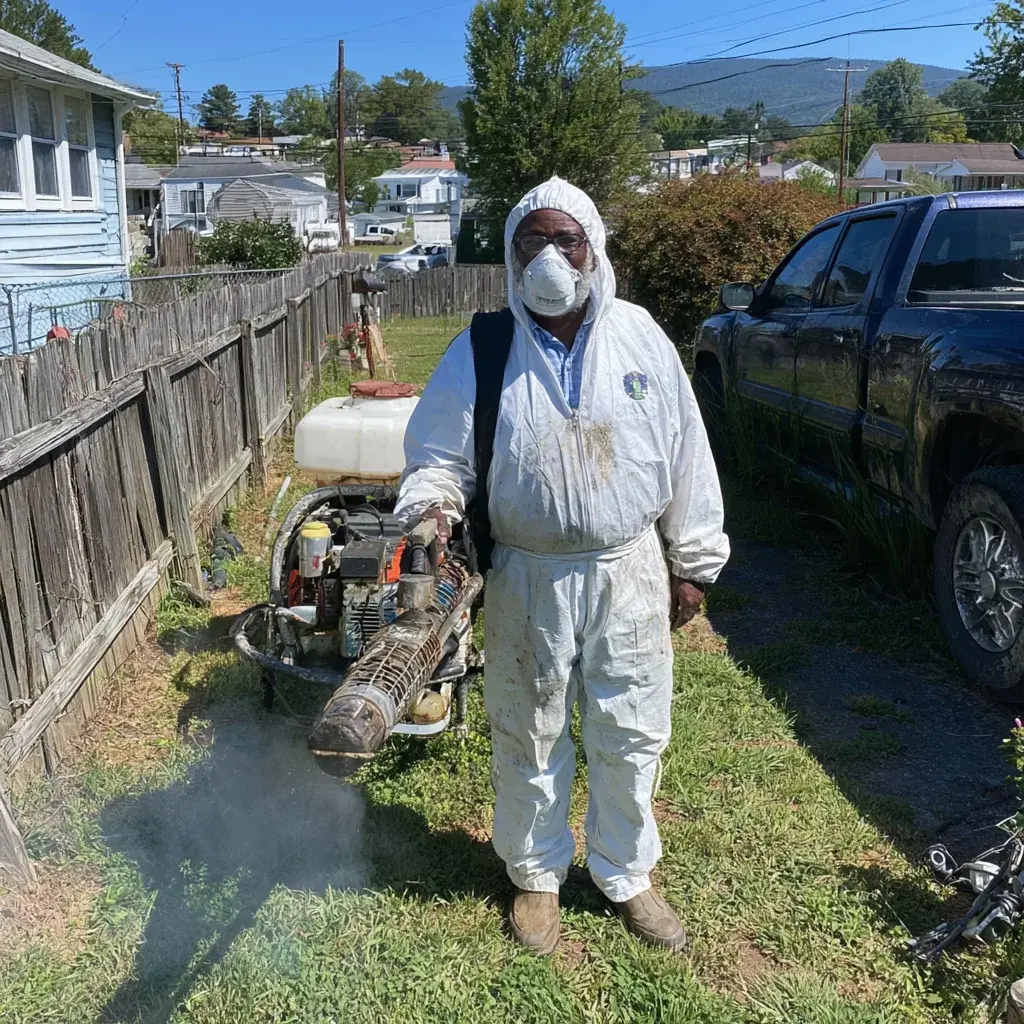
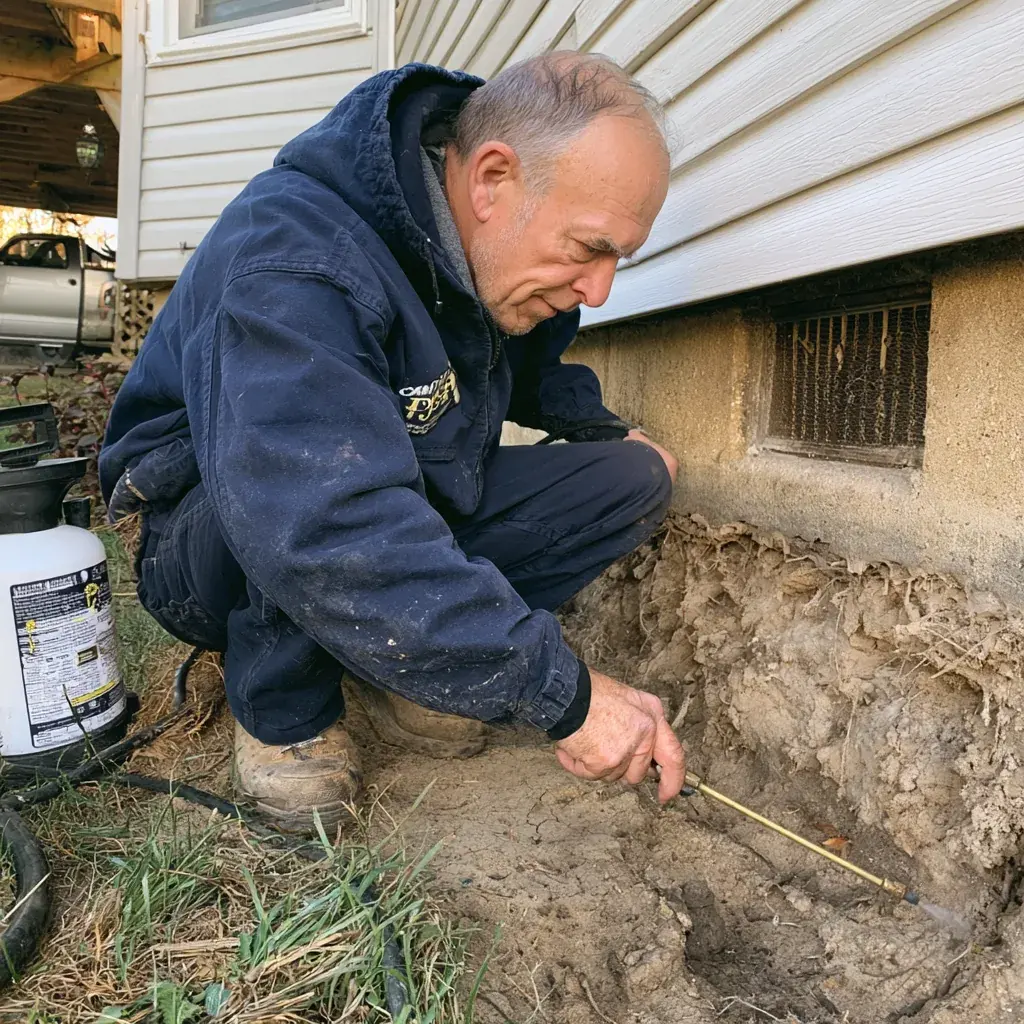
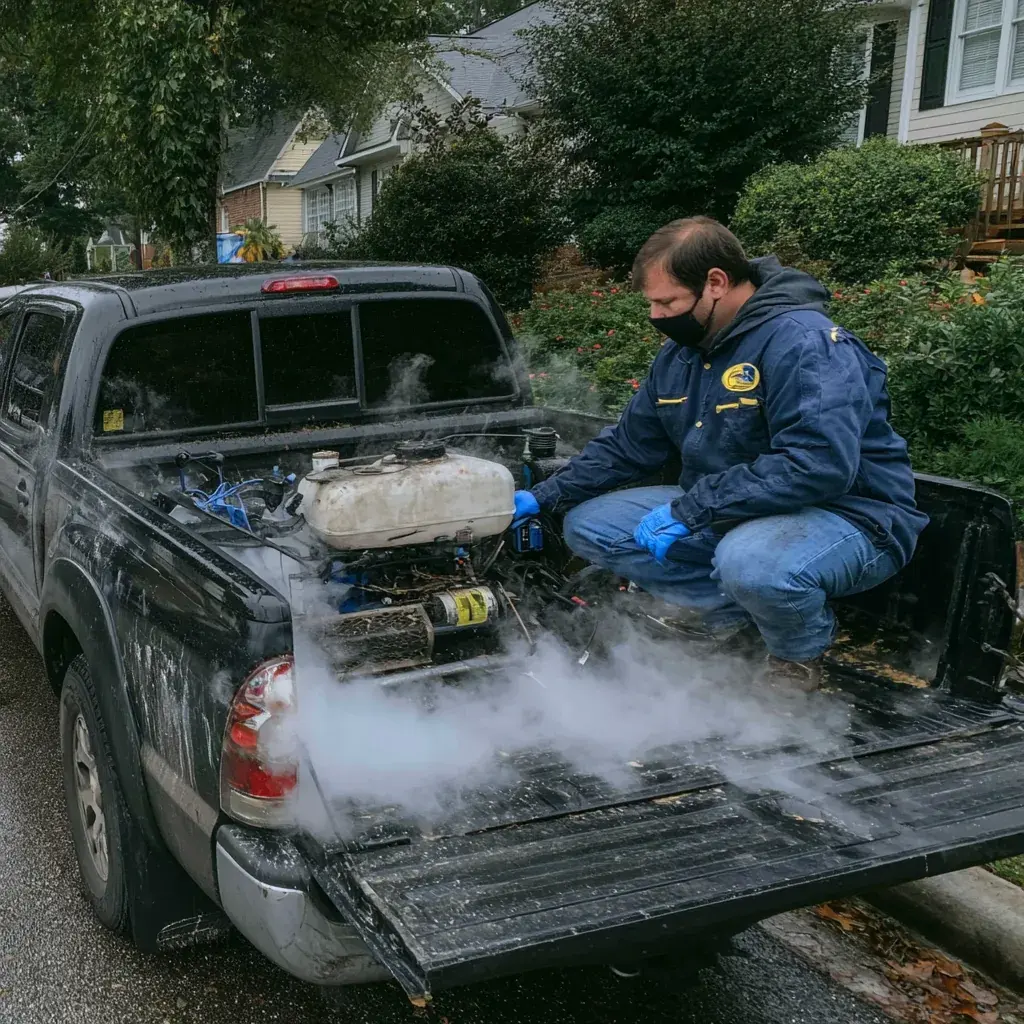
Grown mosquitoes pass the hot hours in cool, still, humid shade: under shrub foliage, in ivy climbing a fence, in tall grass along a tree line, on the dark side of a deck, down a crawl space vent well. A barrier treatment aims at precisely those surfaces, which explains why anybody good spends more time working the shrub line than the open lawn, and why cutting a hedge back can accomplish as much as anything that comes out of a sprayer.
The weekly walk that costs absolutely nothing
Once a week through the season, walk the property carrying a bucket and empty out everything holding water. Ten minutes, start to finish. Flush the birdbath and refill it fresh. Check the gutters after heavy rain, because one blocked section holds water for days. Pull the sag out of the tarp. Flip the wheelbarrow. Look under every single pot standing on the porch.
It is thoroughly unglamorous and it is the highest return work on offer, because it removes production rather than killing grown mosquitoes after they already exist.
Creek bottoms, pine shade and the local pressure
Low ground near the Ochlockonee, out along Lake Lafayette, and around Munson Slough heading toward Killearn Estates stays damp and shaded year round, and any neighborhood backing onto ground like that carries heavier pressure than an open subdivision lot ever will. Longleaf pine shade and pine straw beds hold humidity right up against the house. None of which is a reason to give up on the yard, but it does put a realistic ceiling on what any program can deliver.
When the water belongs to somebody else
Here is the honest limit on all of it. Where the source is a neighbor's neglected pool, a drainage easement, or a ditch on the far side of a fence, treating your own side cuts the grown mosquitoes resting on your property and does nothing whatever about production. A yard program still earns its place, and it earns most of it if the drainage also gets raised with whoever is actually responsible for that ditch. What nobody can honestly sell is a mosquito free yard sitting beside standing water you have no control over.
What a full season of service looks like
Barrier applications repeating through the warm months, worked into the shrub line, the fence, the underside of the deck and any dense ground cover, plus larval treatment for water that genuinely cannot be drained. Yard work in this market often opens around an estimated $120 a visit on a typical lot, which is a guide figure and not a quote, and that number tracks how much shaded edge a property has rather than square footage on its own.
Dealing with this in your home?
Bed bugs travel in luggage and boxes, not seasons, so Leon County calls do not slow down each winter the way ant and roach calls do. Semester turnover near Tallahassee Community College and the moving trucks along Tennessee Street give this city its own steady source of new introductions every August and January.