A quarterly pest plan comes to four visits a year, and the bulk of what you are paying for takes place outside the house. That is the single most useful thing to grasp before setting two quotes side by side, because it explains why a service spending fifteen minutes indoors and forty around the perimeter is doing the job properly rather than skimping on it.
What one visit is actually made up of
On an ordinary quarterly visit to a Tallahassee house, the work divides up roughly as follows.
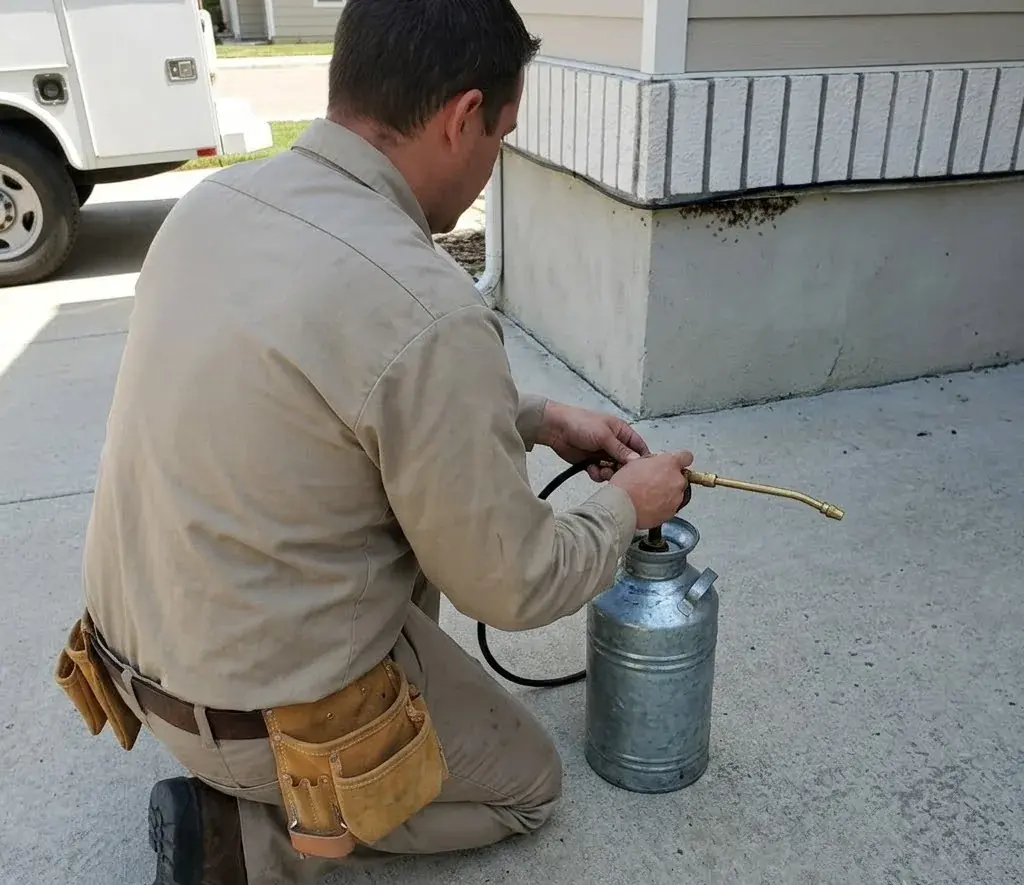
- A slow walk of the perimeter, reading the ground line, the siding joint, and every spot where a utility runs into the wall.
- Spider webs and the beginnings of wasp nests knocked down and cleared off eaves, porch ceilings, light fixtures and door frames.
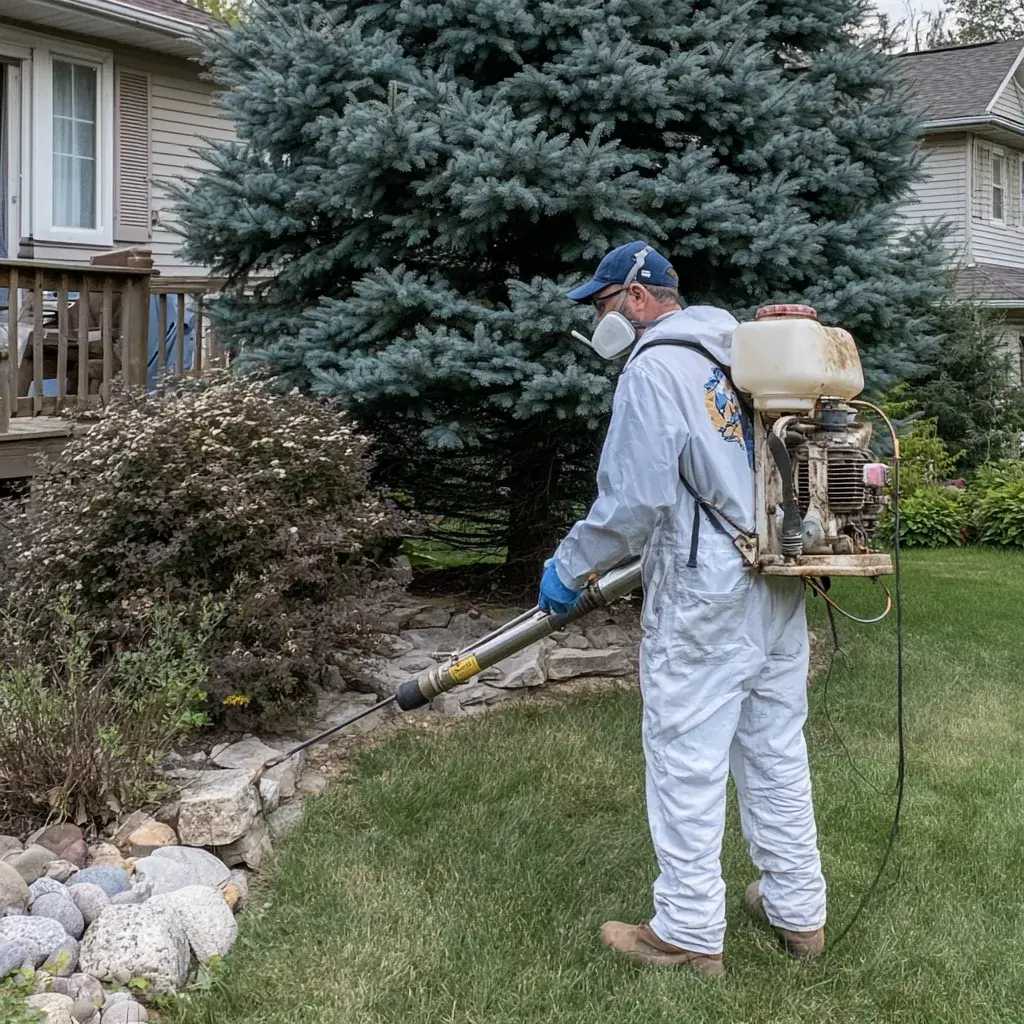
- A treated band along the foundation and around the door and window frames, since that is where most crawling insects make their crossing.
- Granular material worked into mulch beds and along any walkway carrying an ant trail.
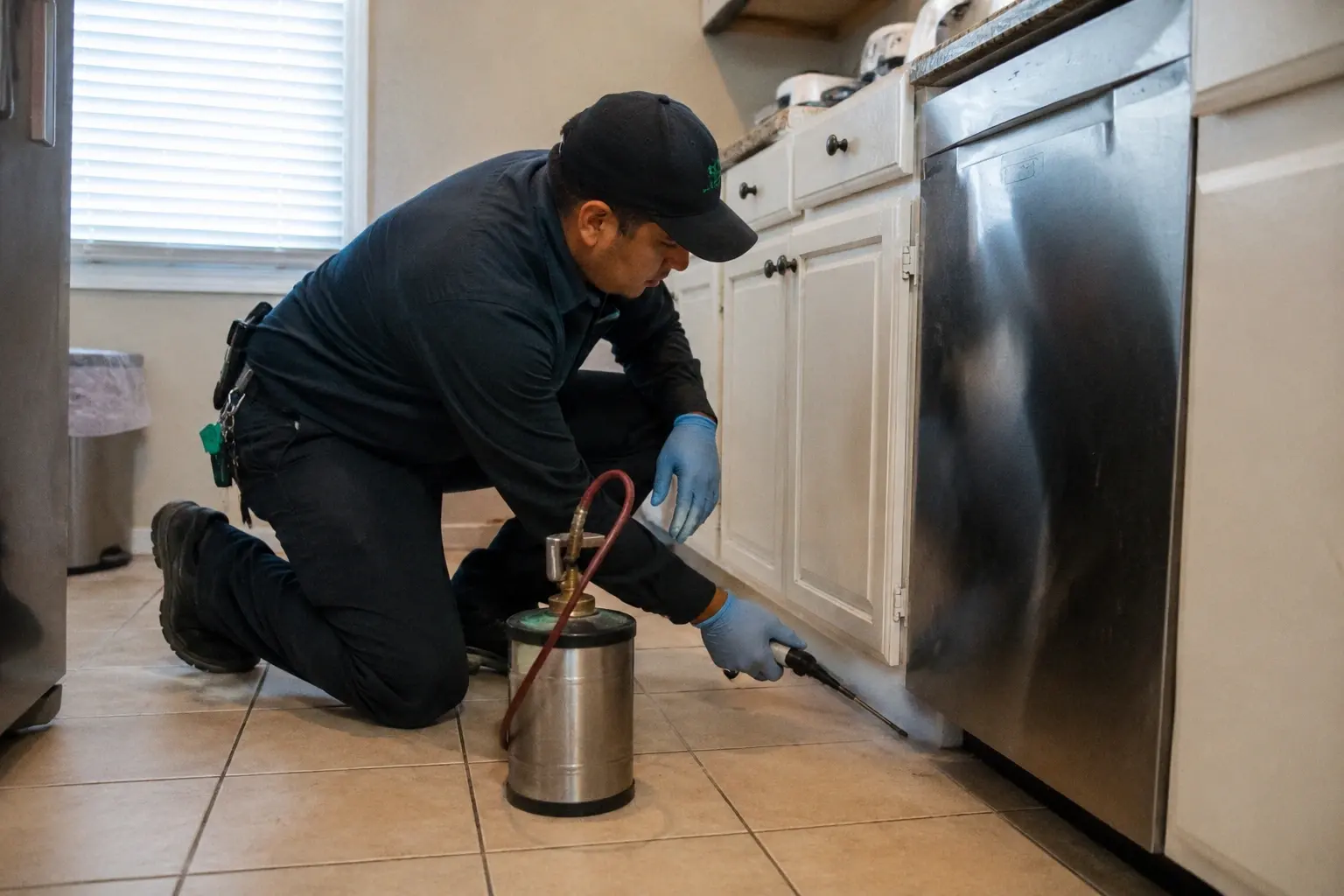
- A look through the garage, the utility room, and underneath the kitchen and bathroom sinks.
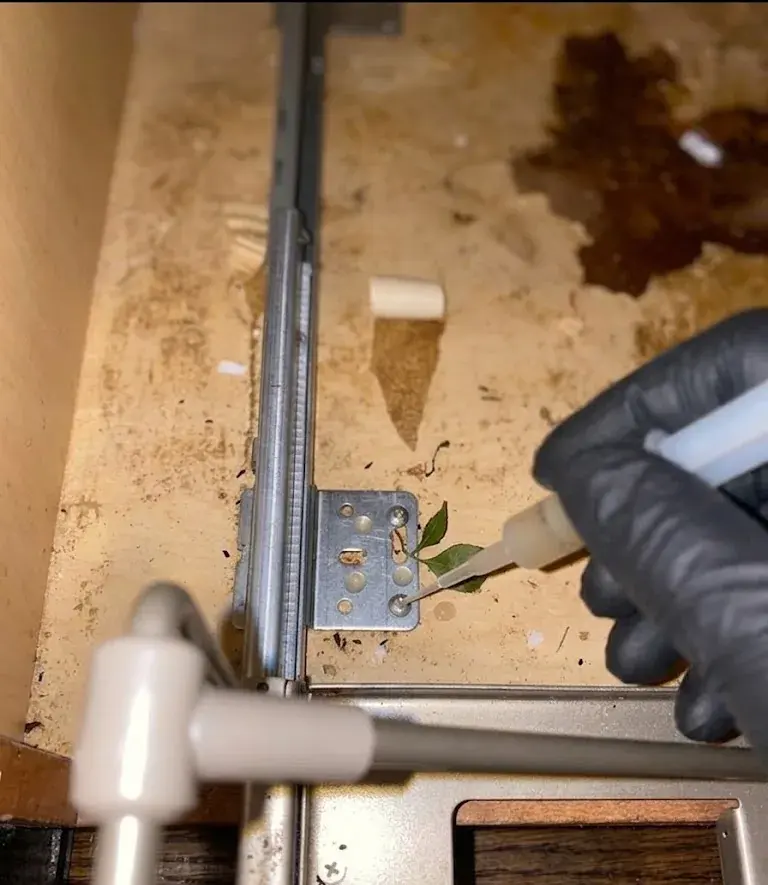
- Bait or monitors set and checked in the two or three interior spots that actually matter, instead of a blanket spray through living space.
- A written note of whatever changed since last visit: a fresh leak, a new woodpile, gutters wanting cleared.
Outside is where all the pressure originates
Nearly every ant, spider, cricket and occasional invader inside a Leon County house came in from the yard. None of them is living in the walls out of preference. They are following moisture, warmth or a food trail over a boundary that happens to be easy to cross. Treat that boundary and the indoor problem largely stops turning up.
Which is exactly why heavy interior spraying is a bad trade. It puts material where the family lives, does nothing whatever about the source, and can drive a population deeper into wall voids where reaching it gets harder. A service leading with the perimeter and keeping interior work targeted is simultaneously the more effective version and the less intrusive one.
Why four times a year covers it
A perimeter treatment does not last forever, and it does not need to. What it needs is to cover the stretch of year when that particular pressure exists, and exterior products hold for anything from weeks to a few months depending on rain and sun. Four visits, timed against the seasons rather than against calendar quarters, take in the long termite flight window, the summer ant and mosquito build, the fall move indoors, and a winter check when the structure reads most easily.
Heavy summer rain is the honest caveat on all of it. Big Bend yards shed water quickly at the surface, but a run of thunderstorms still cuts the life of an exterior application short. That is precisely what the between-visit callback is there for.
Where monthly genuinely justifies the price
Monthly is not just quarterly for people with deeper pockets. In some situations the interval is the treatment, because the population turns over faster than three months allows.
- German cockroaches, where the life cycle and the egg cases demand follow-up every two to four weeks rather than seasonally.
- Any kitchen serving the public, where a single sighting becomes a business problem rather than a nuisance.
- Multi-family buildings, where a treated unit shares a wall with an untreated one.
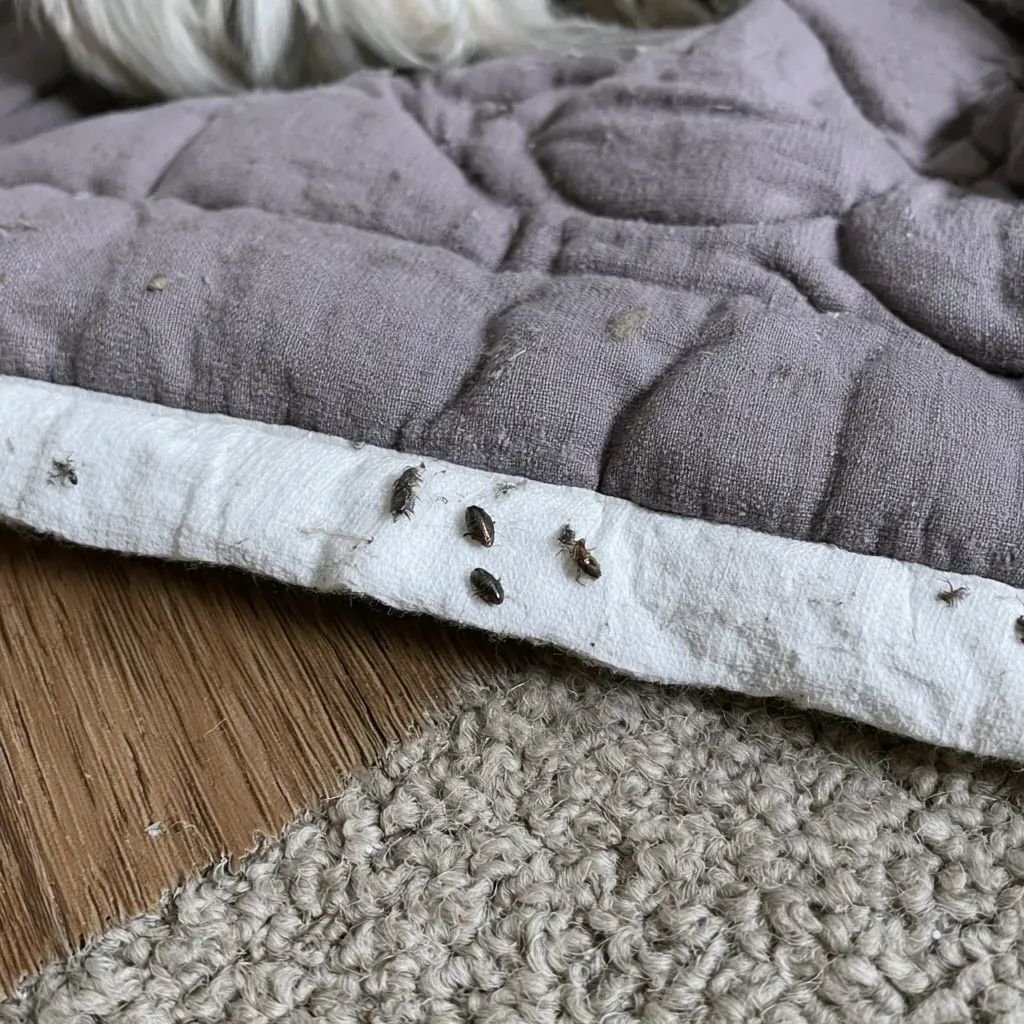
- Active bed bug work, which runs to its own schedule until somebody confirms it clear.
- Stored product pests in a pantry or warehouse, where the source has to be found first and then watched.
- Any rodent job still in progress, which is why local mouse and rat pricing normally builds in weekly follow-ups.
Ask what a callback costs before signing anything
The between-visit callback is the part of any plan that tells you what the plan is worth. Under a genuine quarterly agreement, if ants come back through the kitchen in week six, somebody comes out and re-treats at no additional charge, because the visit already paid for did not hold. That promise is most of what is being bought, considerably more than the four dates on the calendar.
Get it spelled out in plain terms. Is a callback included, is there a limit on how many, does it cover every pest named on the plan or only some, and how fast does somebody actually turn up. A plan with cheap visits and a chargeable callback can easily run more across a year than a slightly pricier plan including them.
Plenty of houses need no plan whatsoever
This is the point where most pest control writing goes quiet. A five year old house with a well sealed slab, gutters running clear, no wood touching soil and no repeat complaints does not need a recurring service at all. Pay for a one-time treatment whenever something turns up, keep the exclusion work current, and put the difference into the gutters. An annual termite inspection is a separate matter and is worth having on any house around here, but that is an inspection rather than a plan.
The test is a simple one. If you cannot name a pest you have seen twice inside the past year, what you are buying is reassurance rather than pest control. Nothing at all wrong with buying reassurance, provided somebody says out loud that this is what it is.
Matching the arrangement to your situation
Published local figures give a workable frame to work from. Ours sit a little under them, and every one of these is a guide range rather than a quote.
| Arrangement | Fits | Guide range |
|---|---|---|
| One-time treatment | One identified problem with a clear source behind it | an estimated $89 to $175 |
| Quarterly plan | Continuing pressure from outside: ants, spiders, occasional invaders | an estimated $75 to $85 per visit |
| Monthly plan | German cockroaches, food handling, multi-family, live bed bug work | an estimated $45 to $55 per visit |
| No plan | A newer build, tight structure, nothing recurring | Nothing beyond an annual inspection |
Before committing to twelve months
Ask for that first visit as a standalone job, and watch how it gets done. Note whether the perimeter gets real time, whether anybody opens the crawl space or hunts for the bath trap access, and whether a written note of the findings arrives afterward. Then decide about a plan.
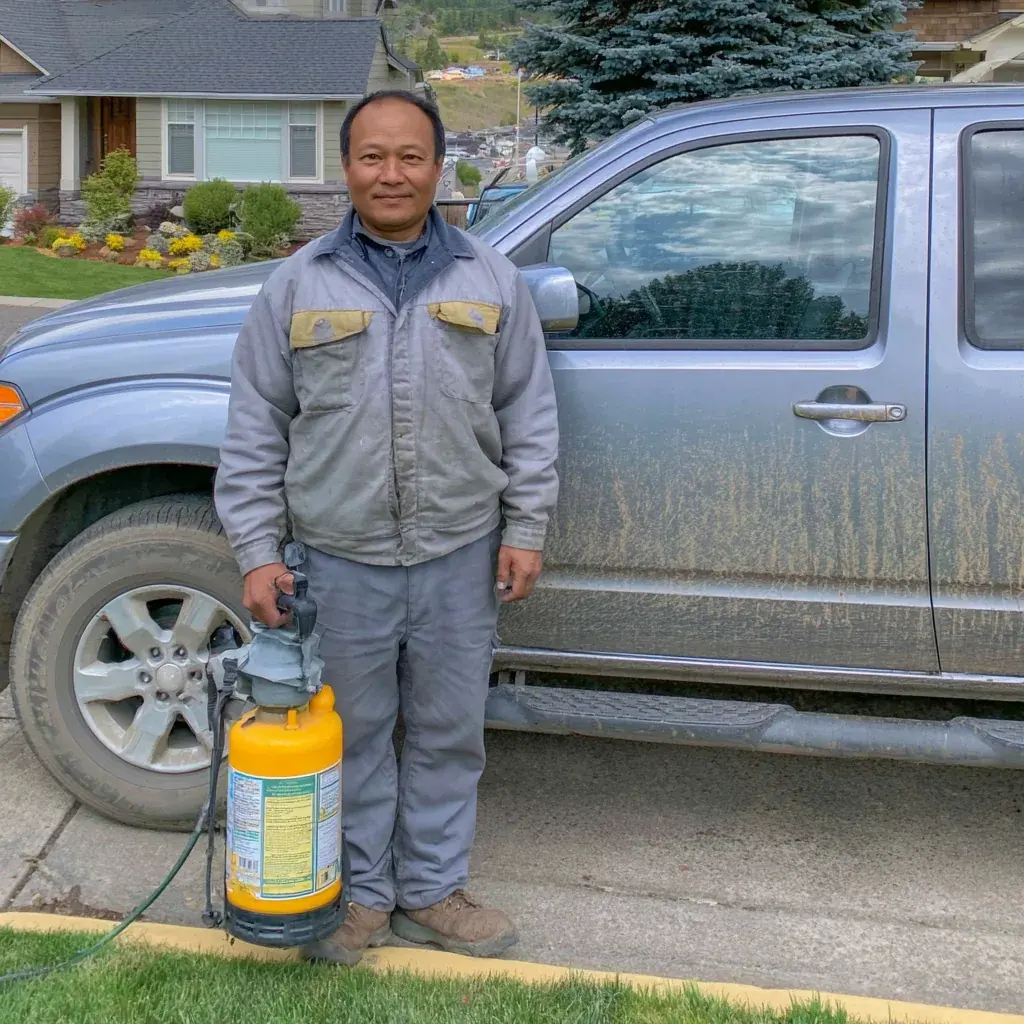
The licensed local pros we connect you with work Tallahassee, Killearn Estates, Bradfordville, Crawfordville and the Leon County towns around them. Where somebody quotes well below the going rate on a plan with no callback included, it is the second figure that matters, not the first.
Dealing with this in your home?
Bed bugs travel in luggage and boxes, not seasons, so Leon County calls do not slow down each winter the way ant and roach calls do. Semester turnover near Tallahassee Community College and the moving trucks along Tennessee Street give this city its own steady source of new introductions every August and January.