Dry wood is the cheapest termite deterrent any homeowner in Leon County can get hold of, and nobody is ever going to knock on the door and offer it. There is no product line in it, nothing renews annually, and it comes with no yard sign. It is a ground cover, a downspout extension, a flower bed graded away from the wall, and a length of trim that no longer touches soil. It is also the half of the job that decides whether a treatment holds for years or gets tested all over again next spring.
Twenty percent is where damp turns into a finding
Florida attaches a number to this. Excessively wet wood, meaning a moisture content of 20 percent or greater, has to be reported as a condition conducive to subterranean termites on the Wood-Destroying Organisms Inspection Report, form DACS-13645. That is not somebody forming an opinion about how a crawl space smelled on the day. It is a meter reading held against a threshold.
It counts twice. Once because damp framing genuinely does appeal to termites and to wood-decay fungi. And again because the reading ends up in writing on the form a buyer sits down and reads, so an owner who ignored a wet crawl space for three years runs into the same number at the worst possible moment.
Why this is specifically a Big Bend problem
The soil here sheds water fast at the surface and then holds its damp underneath. A yard can look bone dry two hours after a thunderstorm while the ground beneath the floor is still releasing water into a closed space with almost no air moving through it. That one combination accounts for more pest pressure around here than any other physical fact about the place, and it is why advice written for heavy clay simply does not carry over. What the surface is telling you has next to nothing to do with what the joists are sitting above.
The conducive conditions list is a repair list
The conditions that have to be reported read far better as a list of jobs than as a list of complaints. At the least they take in wood sitting in direct soil contact, cellulose debris left under the structure, and wood at or above 20 percent moisture. Others that get written down:
- Not enough clearance left between the woodwork and the soil.
- Too much moisture sitting in the crawl space.
- Construction flaws, usually meaning something framed hard against the ground, or a vent somebody built straight over.
- Grading that runs the wrong way, so the yard delivers water to the house rather than away from it.
- Wood-decay fungi, which can appear as a conducive condition entirely on its own.
Six inches, and then eighteen inches
Two numbers out of the state prevention guidance are worth committing to memory, because a tape measure settles both of them. Exterior woodwork wants a minimum of six inches of clearance from the ground. Crawl space beams want at least eighteen inches above it, so that somebody can still inspect the space years from now.
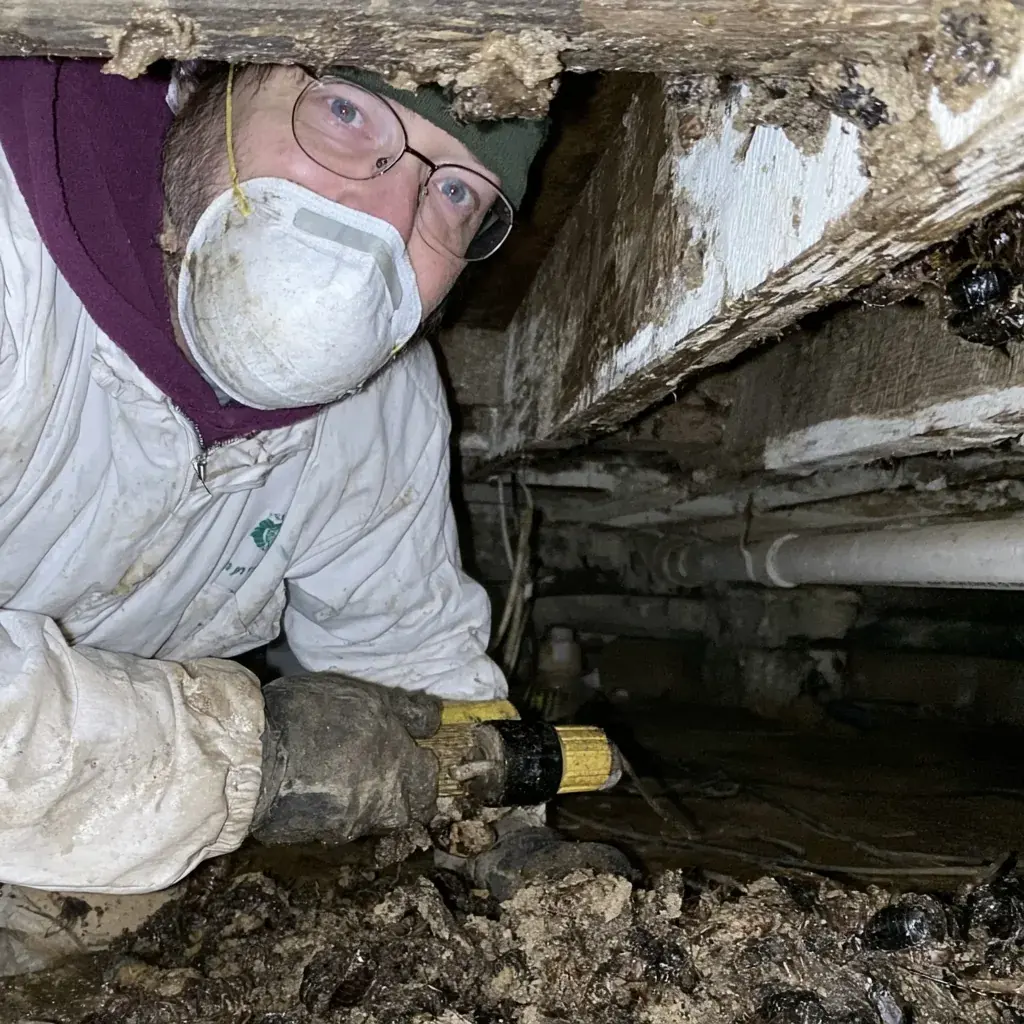
The second of those usually gets passed along as vague advice about clearance, and it has a very hard consequence attached. If nobody can get a shoulder and a flashlight under a girder, that area is not accessible, and inspecting an inaccessible area is not an inspection at all. A crawl space a person can actually move through is worth real money when you sell, because the report on the house says accessible instead of restricted.
What the work looks like in this market
Around here moisture control is sold as a service line in its own right rather than as a footnote, and the job has a recognizable shape to it. A sealed poly ground cover laid over the soil so the earth stops evaporating up into the framing. Vents that actually work, sometimes temperature-controlled ones that open and shut by themselves rather than getting opened in April and forgotten by June. And the water sources tracked down and stopped, which usually turns out to be a supply leak, a condensate line emptying under the floor, or a drain that never quite drained.
Encapsulation is the full version of that: a heavier liner carried up the walls, foam board over the vents, and a dehumidifier sized properly to the space. It costs more and it does more, and it is not automatically the right answer for a small crawl space whose only genuine problem is a downspout emptying at the corner of the foundation. Find out what is causing the reading before you agree to seal the space up around it.
Gutters and grading do the unglamorous half
Water arriving at the foundation sits behind most crawl space readings, and it nearly always arrives from above. A downspout that stops at the wall, a flower bed built up against the siding, mulch heaped against wood trim, a yard sloping gently back toward the house: all four do the same job. Running a downspout six feet further out costs a few dollars and moves hundreds of gallons a year away from the framing. Grading to send water away from the structure is on the state prevention list for exactly that reason.
What the meter is actually telling you
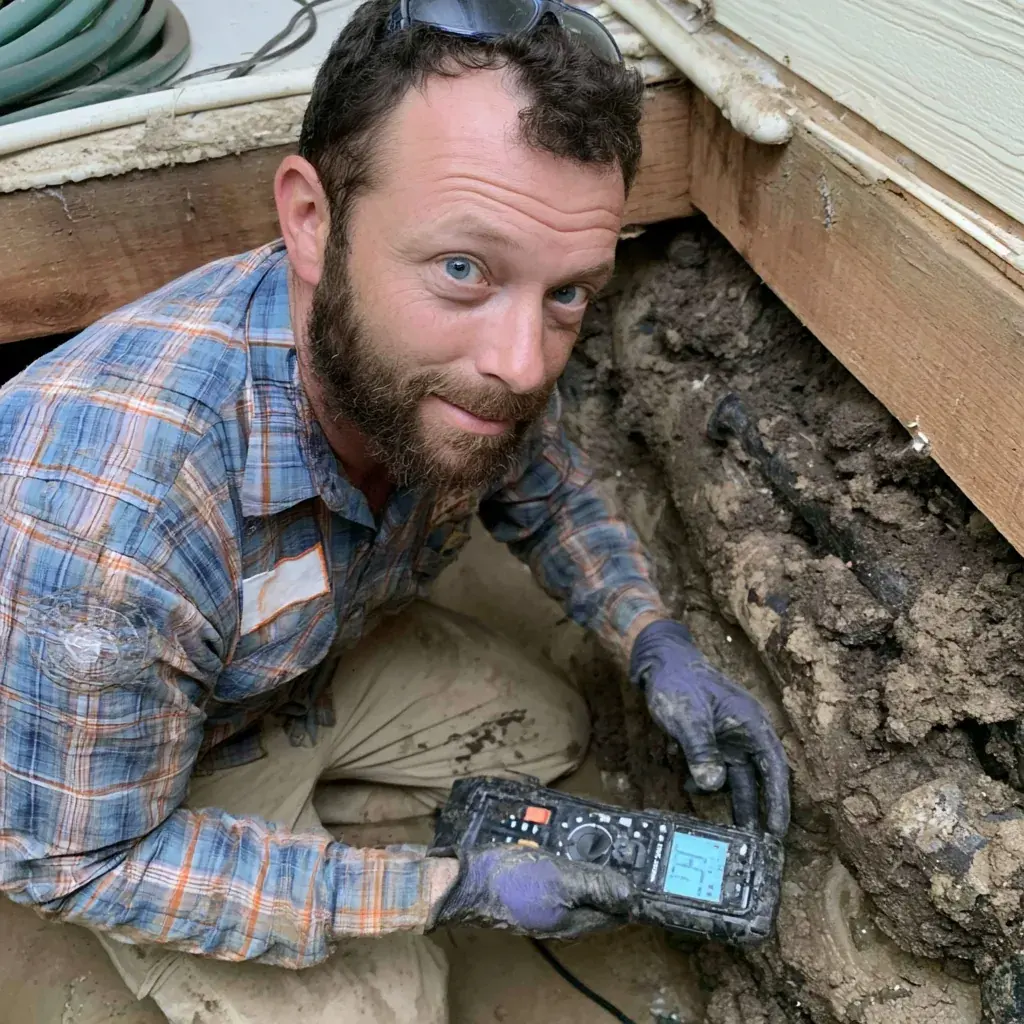
A pin meter costs less than one service call and it turns an argument into a number. Take readings at the band joist, at the ends of joists near an exterior wall, underneath bathrooms, and at any beam sitting close to a pier, because those are the spots that go wet first.
| Reading | What it usually means |
|---|---|
| Under 12 percent | Dry framing. Nothing needed beyond keeping it there. |
| 12 to 15 percent | Ordinary seasonal movement in a vented space. Read it again in a wet month. |
| 15 to 19 percent | Heading the wrong way. Find the source while fixing it is still cheap. |
| 20 percent or above | Excessively wet wood. Reportable as a condition conducive to subterranean termites, and the band in which wood-decay fungi settle in happily. |
Take it in this order
Stop the water, dry the space, then treat whatever is left. Running that backwards is how a house ends up being treated twice. Cut the sources off outside, clear the cellulose debris and anything in soil contact underneath, get the ground covered, and only then have somebody put a meter on the framing and tell you what the numbers actually say.
If you would rather have the reading before spending anything at all, the licensed local pros we connect you with inspect crawl spaces across Tallahassee, Killearn Estates, Ox Bottom and Lake Jackson. Crawl space work starts at an estimated $55 added onto a service already on the books and runs to a great deal more for full encapsulation, and getting the number first is the only thing that tells you which end of that range you are standing in.
Dealing with this in your home?
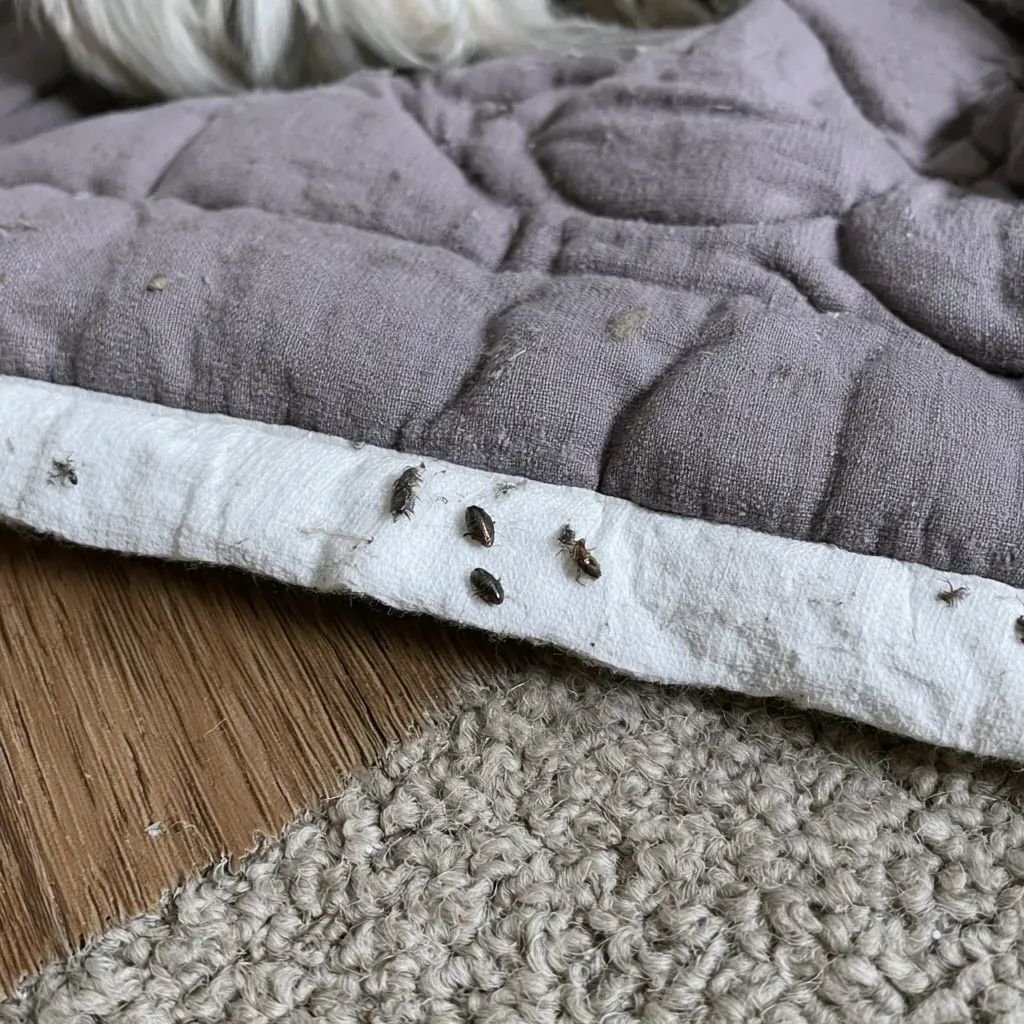
Bed bugs travel in luggage and boxes, not seasons, so Leon County calls do not slow down each winter the way ant and roach calls do. Semester turnover near Tallahassee Community College and the moving trucks along Tennessee Street give this city its own steady source of new introductions every August and January.