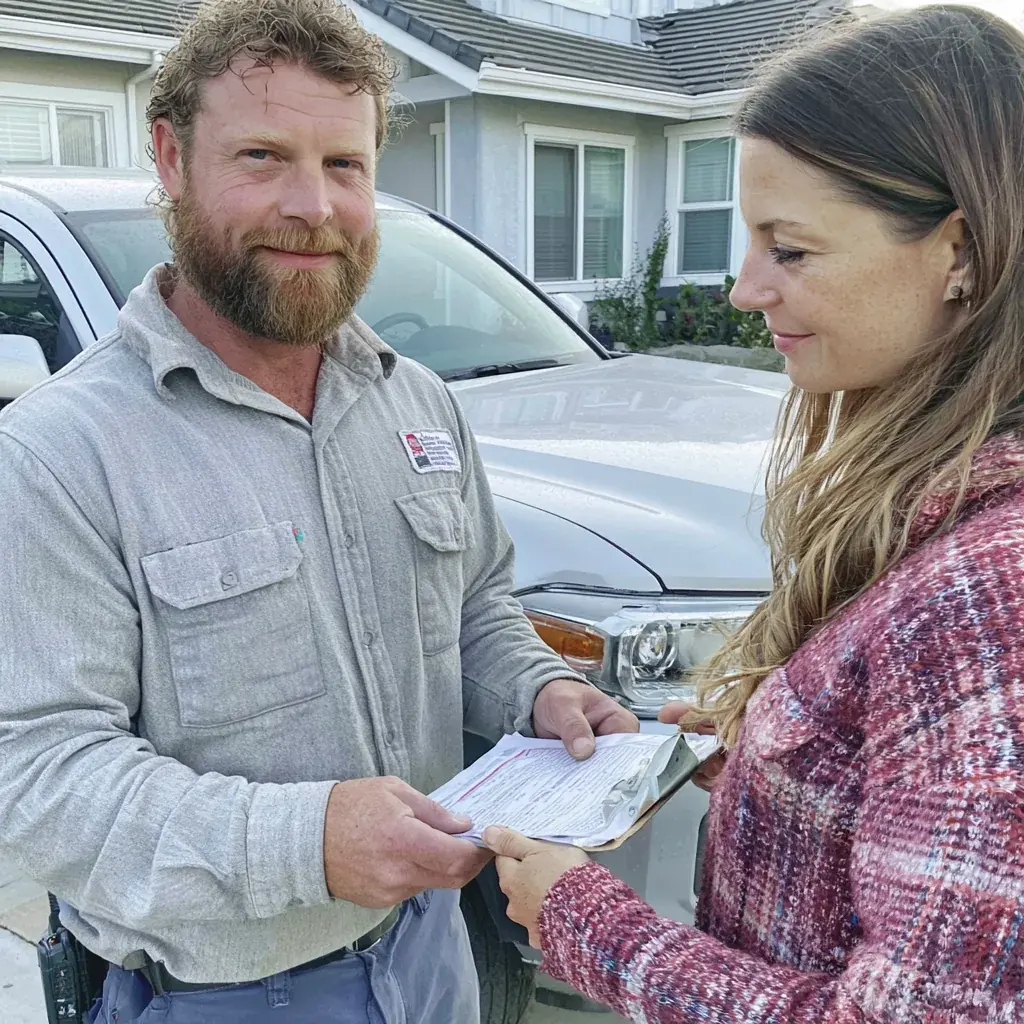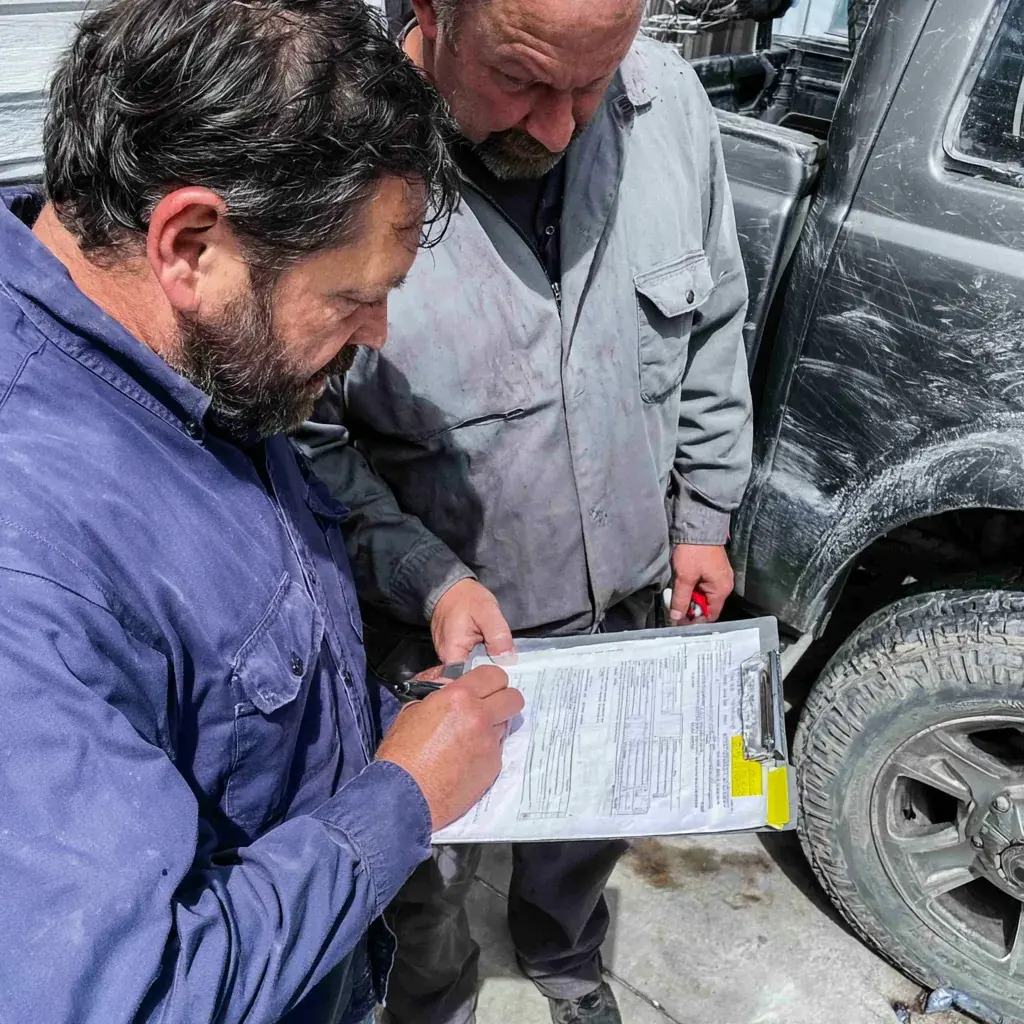
Print the proposal out, sit down at the kitchen table with a pen, and work through it against six things. Florida does not leave what goes into a termite agreement to the company's discretion. Every contract or agreement for controlling or preventing wood-destroying organisms in this state has to be in writing, and it has to carry six specific items as a minimum. Where one of them is missing, asking for it is not being awkward. It is asking for the document the rules already demand.
All six items, in one place
Here is the entire list. It fits on a napkin, which makes it all the stranger how few homeowners in Leon County have ever laid eyes on it.
- The licensee's full name and business address, and the address of the property being treated.
- Whether the work is treating an infestation that is already there or preventing one.
- A diagram or sketch of the structure showing where the infestation and the treatment are, with any visibly damaged timbers marked on it.
- Whether re-inspections will happen at all, and roughly how far apart they fall.
- The circumstances that oblige the company to treat again.
- One total price for the treatment service, agreed and written down.
The license number and category, not just a logo
Florida certifies structural pest control by category, which means a company can be cleared for one type of work and not for another sitting right beside it. The license number printed on the paperwork, and the category behind that number, are how anybody checks that the outfit standing in the yard is cleared for the work being sold. A certificate expires a year after the day it was issued and renews on that same anniversary, so it has a finite life and it can lapse, and the relevant date is different at every company you call.
To check what you are looking at, the FDACS Bureau of Entomology and Pest Control takes calls on 1-800-435-7352. Nobody holding a proper license objects to that call being made.
The diagram is the part people skim past
A diagram sounds like pure paperwork. It is closer to a map of whatever argument comes later. Somebody has to walk the outside of the house, get under the floor where there is a crawl space, and draw the footprint of the structure with the findings marked onto it. That drawing is exactly why the rules require the technician to measure and graph or sketch the structure once evidence is found or a proposal issued, since both the application rate and the price rest on real dimensions rather than an estimate made from the driveway.
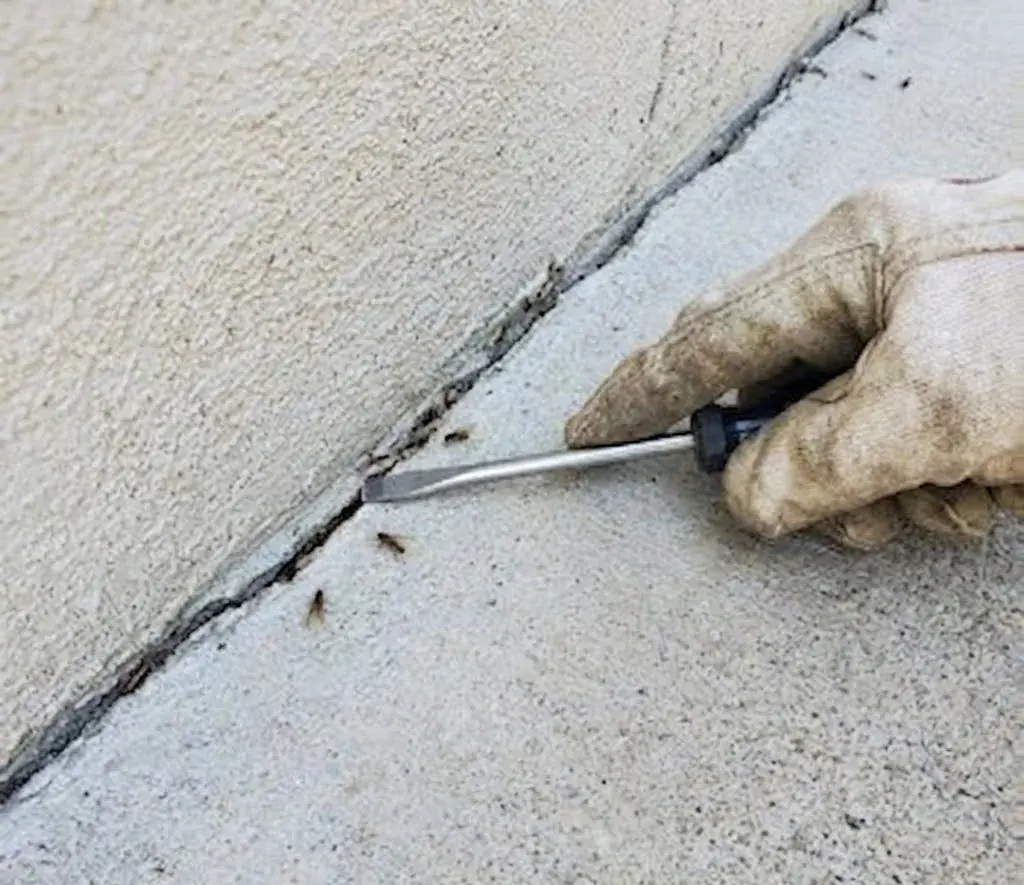
On a slab home, that diagram should be earning its keep around the bath trap, the plumbing penetrations, and every joint where the slab has shrunk back away from the foundation wall. Slab on grade ranks among the commonest construction types in this state, and a diagram treating a slab home as one featureless rectangle has not looked at the places termites genuinely use.
Active against inactive is no small distinction
The diagram has to state whether what turned up is active or inactive. Old evidence on a house treated years back is a completely different situation from a live colony working through a joist this week, and the price, the urgency and the follow-up should all read differently as a result. Where the paperwork stays vague on that point, ask which it is and ask for the answer in writing. A reassurance given out loud forms no part of the agreement.
Re-inspections: whether at all, and how often
The agreement has to say whether re-inspections happen at all, and roughly how often. Note that whether is a genuine option here. An agreement can honestly state that there are none, and plenty do exactly that. What it cannot do is stay quiet while a salesperson implies somebody will be back each year. Annual inspection is what the state recommends for prevention generally, so where you are paying for continuing coverage, a yearly look at the structure is a fair thing to want written down.
Conditions for re-treatment, and the 30 day clock on it
This is the item deciding what the money actually bought. Most agreements in the trade run re-treatment only, meaning the company treats again if termites appear during the agreement period, carrying no obligation whatsoever to repair anything already eaten. Re-treatment plus damage repair covers correction up to a stated amount, is not offered by every company, and normally requires the structure to meet certain criteria before it qualifies. An agreement may also carry no warranty at all, and wherever that applies, the absence has to be clearly indicated.
A clock comes attached to it. Under the rules, the re-treatment obligation runs within 30 days of written notice. Written notice is the operative phrase in that sentence. A phone call made in July that nobody wrote down is not the same thing as a dated letter or email, so put it in writing the day something turns up and hold onto your copy.
One total price, not a starting point
The total price for the treatment service belongs on the agreement itself. Not a per-linear-foot rate left for you to multiply out, and not a starting-at number. Ranges are perfectly normal in advertising, and termite work does get quoted locally in wide bands, but the document that gets signed should finish with a figure both sides have agreed on. Where renewal charges apply after the first year, ask what they come to and ask where in the document they appear.
Take the whole thing to the kitchen table
The state's own advice about termites runs considerably calmer than most sales conversations: do not panic, and do not be rushed into anything. Termites are not going to cause significant structural damage over a matter of weeks, and choosing a company you actually trust counts for more than signing tonight. So carry the proposal indoors, work it against the six items, and mark up whatever is not there.
Once you are ready to compare, the licensed local pros we connect you with cover Tallahassee, Killearn Estates, Bradfordville and the rest of Leon County, and they will put the diagram and the terms in front of you before anything at all gets treated. Reading the paperwork first is not a delay in the job. It is the part that settles what you own once the job is done.
Dealing with this in your home?
Bed bugs travel in luggage and boxes, not seasons, so Leon County calls do not slow down each winter the way ant and roach calls do. Semester turnover near Tallahassee Community College and the moving trucks along Tennessee Street give this city its own steady source of new introductions every August and January.