Somewhere inside most Florida real estate deals, somebody says the words we just need a clear termite letter. It gets delivered with confidence, echoed by agents on both sides, and it is simply wrong. The state agency that adopted the form states in plain language that a clear report is not to be sought and is not required in order to close. Chasing one burns time, and now and again it nudges people toward something a good deal worse than a delay.
What the agency itself actually says
The Florida Wood-Destroying Organisms Inspection Report, form DACS-13645, is the one form legally permitted for this purpose, and it is required on nearly every residential structure sold anywhere in the state. The guidance published with it makes two points that rarely survive the journey to a closing table. The first: a clear report is neither to be sought nor required in order to close. The second: most Florida homes over 10 to 15 years old will carry some evidence of wood-destroying organisms.
Put those two side by side and the whole picture shifts. Evidence is the ordinary condition of an older house in Leon County rather than a scandal. A 1970s ranch carrying an inactive note and one old mud tube on a pier is behaving precisely the way the state expects it to.
Why past evidence goes on the form at all
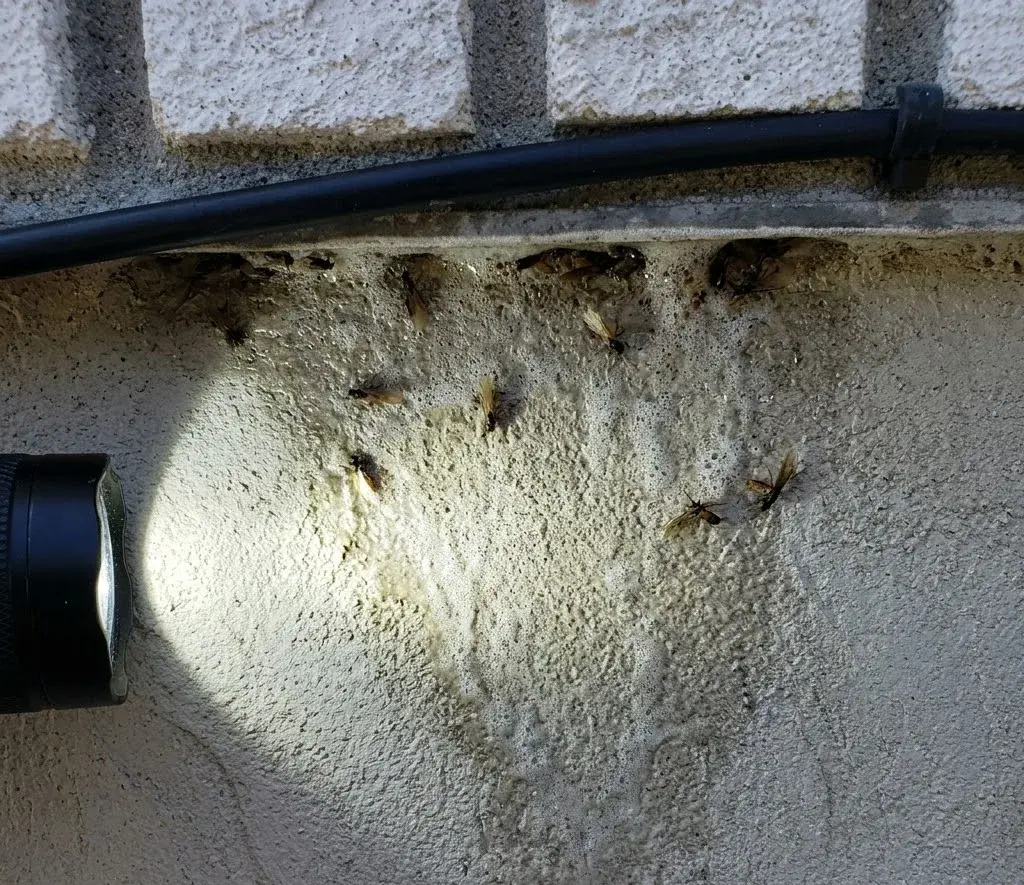
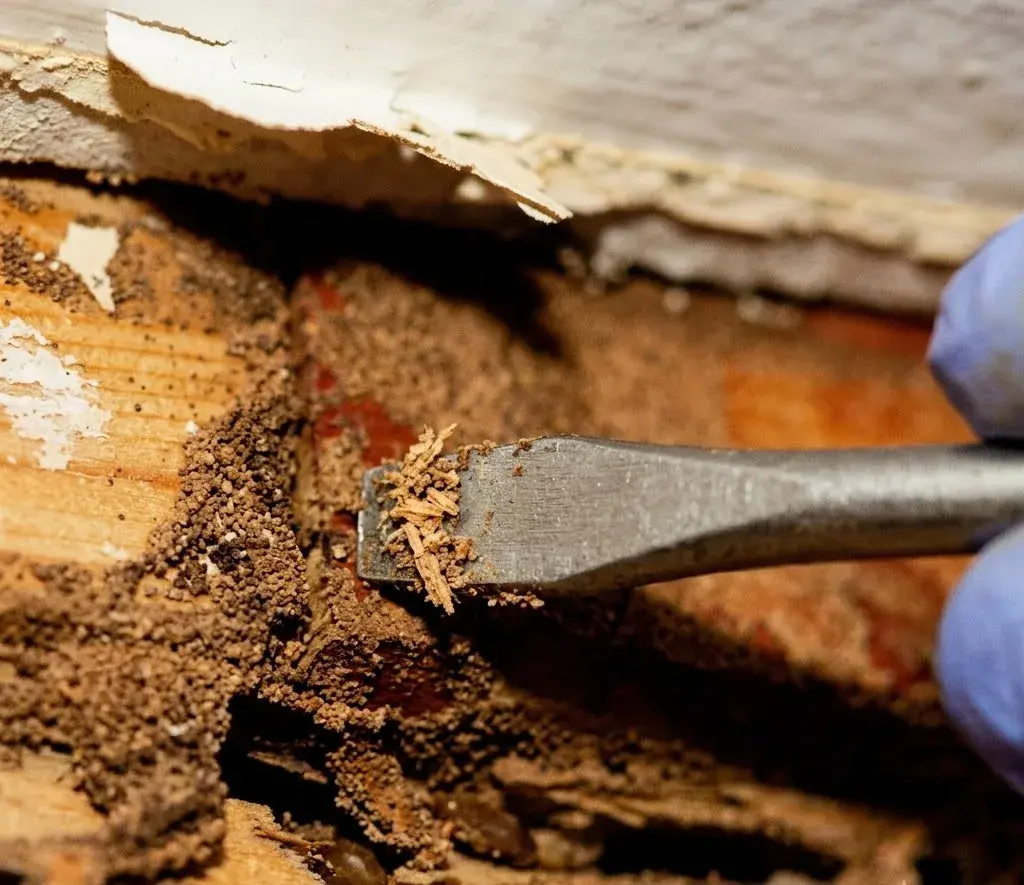
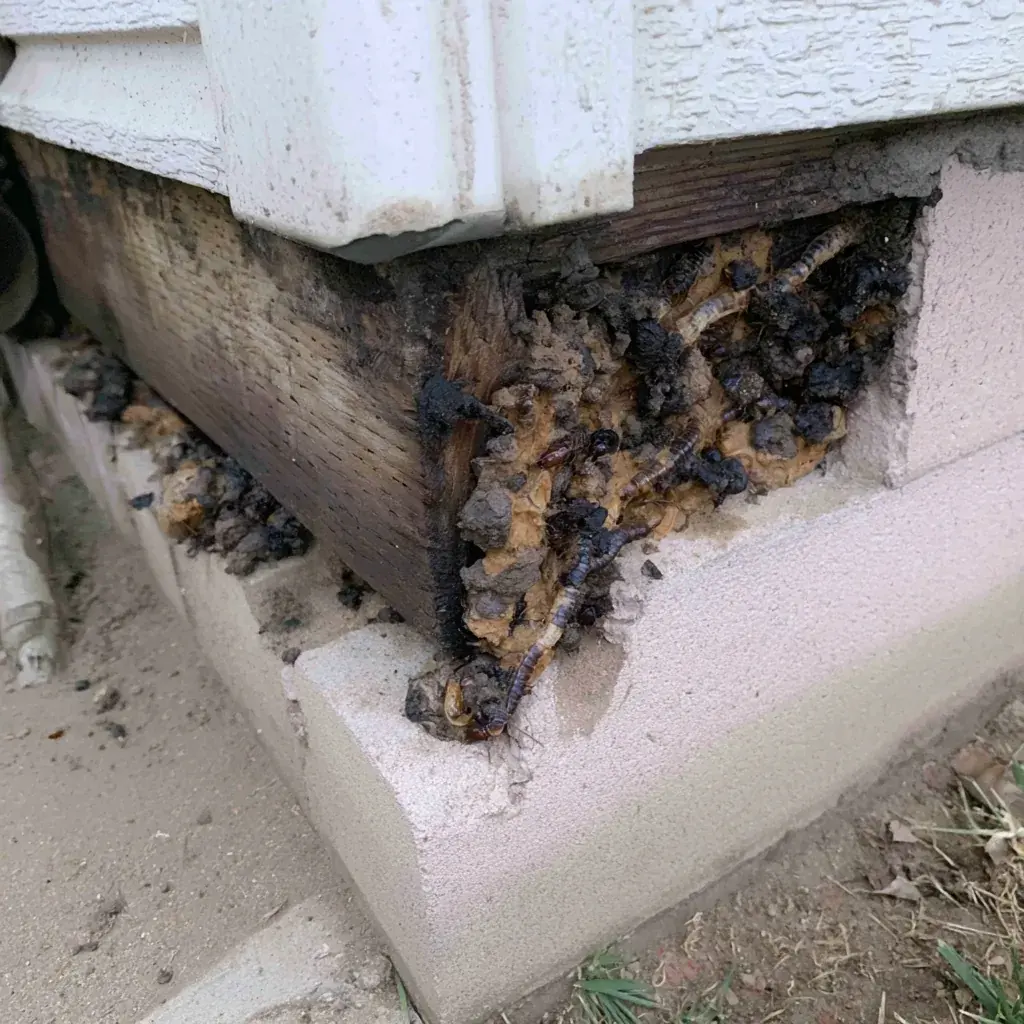
The report covers activity both present and past, visible in, on or under the structure, or in or on the debris underneath it. That breadth is deliberate. A shed wing lying in a crawl space, an old shelter tube, a handful of exit holes in a floor joist: every bit of it goes onto the form even where the insect vanished decades ago, because whoever looks at this house next deserves to know where to check.
It also works in your favor. Where a treatment happened fifteen years ago and the tubes were simply left in place, a report recording nothing at all would leave the next buyer, the next lender and the next inspector guessing. The form is a record, not a grade.
A clean sheet can mean two different things
A report comes back with nothing on it for one of two reasons. Either the house genuinely has no visible evidence, which happens most often on newer construction, or nobody looked especially hard. The inspection is a careful visual examination of accessible areas, plus sounding of accessible structural members beside slab areas in contact with masonry walls and other spots particularly susceptible to attack. Accessible is doing enormous work inside that sentence. A crawl space with an access door that will not budge, a garage wall behind stacked boxes, or a bath trap nobody opened will each produce a very quiet form.
Questions worth far more than a clean sheet
Rather than asking whether the report might come back clear, ask the things the report and the inspector are actually able to answer.
- Is the evidence recorded as active or inactive, and what exactly settled that call?
- Which conditions conducive to termites got listed, and which ones can I put right myself?
- Was any part of it inaccessible, and what would getting in there involve?
- If treatment has happened here before, is the written agreement and warranty attached to this report, the way it should be?
- Does a continuing agreement exist on this house, and does it transfer?
- What does the back of the form say, and which of those conditions apply in my case?
Asking for a rewrite is asking for real trouble
Every so often somebody floats the idea of simply obtaining a different report. Issuing a later no-evidence report once evidence has been found violates the rules and could be considered fraud. Nobody treats that as a technicality to be waved through. It puts the license of whoever signs it at risk, and it drops a document into the file that some future buyer can hold up in the air.
Where a finding is genuinely mistaken, the remedy is a re-inspection with the reasoning set down in writing, not a fresh clean copy. And if a company offers to make the problem vanish on paper, you have just learned something useful about that company at no cost.
What the form was never built to do
A great deal of disappointment comes from expecting this report to be something it never was. It is not a warranty, it does not clear the structure, and it does not report damage. It has nothing to say about wood-decay fungi damage and nothing at all about wildlife in the attic. People call it a clearance letter or a termite letter and it is neither one, since it covers powderpost beetles, old house borers, carpenter ants and sometimes carpenter bees right alongside termites.
Nothing in the state guidance hands it an expiration date either. If somebody claims it is only good for a month, ask them to point at where that is written down. Termites can work through a crack around a thirty-second of an inch wide and build shelter tubes at roughly two and a half inches an hour, so a report describes one particular day rather than promising anything whatsoever about next month.
What to do with the report once you have it
Read the conditions conducive list as a to-do list rather than an accusation. Wood in direct soil contact, cellulose debris under the floor, insufficient clearance between wood and soil, excessive crawl space moisture, improper grading, and wood at 20 percent moisture or above are all reportable, and a fair few of them amount to one Saturday with a rake and a wheelbarrow. Putting them right is what genuinely changes the risk sitting on the house.
Where a report on a house you are buying or selling in Tallahassee, Killearn Estates or Woodville carries findings that make no sense to you, get somebody to walk you through the diagram in person. The licensed local pros we connect you with issue these reports right across Leon County, and they can tell you which findings genuinely move the value of a house and which ones are simply an older house being an older house.
Dealing with this in your home?
Bed bugs travel in luggage and boxes, not seasons, so Leon County calls do not slow down each winter the way ant and roach calls do. Semester turnover near Tallahassee Community College and the moving trucks along Tennessee Street give this city its own steady source of new introductions every August and January.